Contact-tracing is central in new European health policies | proposal for a European health regulation

Europe is working on more cooperation and coordination in the area of health, that has resulted in a proposal by the Council of the European Union for a health regulation [1] that recently has been made public. Much in the proposal is organisational in nature and mainly affects member states.

Contact-tracing as a central element
One of the subjects that will affect citizens is that contact-tracing is a central element in the proposal [2]. According to the proposal a large messaging European system is created in which the authorities will exchange contact and health data of all citizens [3]. The definition of contact-tracing is found in article 3 paragraph 4:

‘contact tracing’ means measures to identify persons who have been exposed to a source of a serious cross-border threat to health, and who are in danger of being infected or being infectious or who have developed a communicable disease, through manual or other technological means, with the sole objective of rapidly identifying potentially newly infected persons who may have come into contact with existing cases, in order to reduce further onward transmission;

Contact-tracing will be an important element in the prevention, preparedness and response planning of chapter II (article 5 paragraph 4) and in the epidemiological surveillance described in chapter III of the proposal.
The proposal includes a ‘network for epidemiological surveillance’ that shall aim to support the contact-tracing measures of competent health authorities; the national authorities shall provide information about contact-tracing monitoring systems developed at national level to the network (article 13).
In the European Early Warning and Response System (EWRS) contact-tracing is important also, see article 18 (markup by me):

Taking into account Member States’ opinions, the ECDC shall continuously update the EWRS allowing for the use of modern technologies, such as digital mobile applications, artificial intelligence models, space-enabled applications, or other technologies for automated contact tracing, building upon the contact-tracing technologies developed by the Member States or by the Union, used for the purpose of combatting serious cross-border threats to health. The ECDC, in close cooperation with Member States, shall facilitate interoperability with national systems for the purposes of the EWRS.

An alert notification by a national authority to the Commission shall include personal data necessary for contact tracing (article 19).

Data protection
Of course measures regarding data protection are provided for [4].

Article 28
Protection of personal data concerning the EWRS selective messaging functionality

1. The EWRS shall include a selective messaging functionality allowing personal data, including contact and health data, to be communicated only to the national competent authorities involved in contact-tracing measures and medical evacuation procedures. That selective messaging functionality shall be designed and operated so as to ensure safe and lawful processing of personal data and to link with contact-tracing systems at Union level.
2. Where national competent authorities implementing contact-tracing measures or medical evacuation procedures communicate, through the EWRS, personal data necessary for contact-tracing purposes pursuant to Article 19(3), they shall use the selective messaging functionality referred to in paragraph 1 of this Article and communicate the data only to the other Member States involved in the contact-tracing or medical evacuation measures.
3. When communicating the data referred to in paragraph 2, the national competent authorities shall refer to the alert communicated previously through the EWRS.
4. The selective message functionality shall be used solely for the purpose of contact tracing and medical evacuation. It shall only allow national competent authorities to receive data that were sent to them by other national competent authorities. The ECDC shall only access the data required to ensure the proper functioning of the selective message functionality. Messages containing personal data shall automatically be erased from the selective message functionality 14 days after the date of their posting at the latest.
5. Where necessary for the purpose of contact tracing, personal data may also be exchanged using contact-tracing technologies. The national competent authorities shall not retain the contact data and health data received through the selective message functionality for longer than the retention period applicable in the context of their national contact-tracing activities.
6. The Commission shall adopt delegated acts to supplement this Regulation by establishing:
(a) detailed requirements necessary to ensure that the operation of the EWRS and the processing of data complies with Regulation (EU) 2016/679 and Regulation (EU) 2018/1725 including the respective responsibilities of the national competent authorities and of the ECDC; and
(b) a list of the categories of personal data that may be exchanged for the purpose of the coordination of contact-tracing measures.
7. The Commission shall, by means of implementing acts, adopt:
(a) procedures for the interlinking of the EWRS with contact-tracing systems at Union and international levels; and
(b) the modalities for processing contact-tracing technologies and their interoperability, as well as the cases where, and the conditions under which, the third countries may be granted access to contact tracing interoperability and the practical arrangements for such access, in full compliance with the GDPR and the applicable case law of the Court of Justice of the European Union.
Those implementing acts shall be adopted in accordance with the examination procedure referred to in Article 29(2).

Data protection organisations would do well to follow developments around this proposal closely because in Europe, theory and reality do not always match. The system of contact-tracing should not develop into a surveillance system, enabling governments and the EU to monitor and influence every citizen.


Notes
[1] Proposal (pdf) of 7 October 2022 for a regulation of the European Parliament and of the Council on serious cross-border threats to health and repealing Decision No 1082/2013/EU – Outcome of the European Parliament’s first reading (Strasbourg, 3 to 6 October 2022). Interinstitutional file: 2020/0322(COD).
[2] See page 7: “The capacity for contact tracing should be strengthened via the creation
of an automated system, using modern technologies” and on page 32:

(37) The occurrence of an event that corresponds to a serious cross-border threat to health and is likely to have Union-wide consequences should require the Member States concerned to take particular control or contact-tracing measures in a coordinated manner in order to identify people already contaminated and those persons exposed to risk. Such coordination could require the exchange of personal data, including sensitive information related to health and information about confirmed or suspected human cases of the disease or infection, between those Member States directly involved in the contact-tracing measures.

[3] Paragraph (39) on page 34.
[4] See also the first sentence of paragraph (39) on page 34, the last words of paragraph (43) on page 36. The Commission will have a central role in defining the criteria, see paragraph (46) on page 38.

Geplaatst in English - posts in English on this blog, Europa, Grondrechten, ICT, privacy, e-commerce | Tags: , , , , | Plaats een reactie

De ‘rode vlaggen’ van het ‪AMLC die geen vlaggen zijn en ook niet rood | ‘Misbruik van rechtsvormen’

Het AMLC publiceerde een artikel over rode vlaggen inzake misbruik van rechtsvormen waarin opmerkelijke dingen staan:

  • De rechtspersoon is daags na oprichting niet bereikbaar“: dat een pas opgerichte bv kort na de oprichting niet bereikbaar is, lijkt me niet meer dan logisch. Dus dit kopje bij de ‘rode vlag’ klopt niet. Slechte bereikbaarheid kan inderdaad een aanwijzing zijn, maar dat hangt dan natuurlijk wel af van het type activiteiten van de rechtspersoon.
  • Ontbreken Btw identificatienummer“: niet alle rechtspersonen verrichten diensten waarover btw wordt berekend. Dus het is logischer om hier te schrijven dat het ontbreken van een btw-nummer bij een activiteit die tot in rekening brengen van btw zou moeten leiden, een aanwijzing is. Zie ook hierna bij ‘parkeren van assets’.
  • Vestiging in bedrijfsverzamelgebouw“: het zal best waar zijn dat de opsporing criminele bv’s vaak in bedrijfsverzamelgebouwen aantreft, maar om te zeggen dat alle rechtspersonen die gevestigd zijn in een bedrijfsverzamelgebouw verdacht zijn, gaat echt te ver. In het stukje staat ook niets over de omvang en de aard van het gehuurde. Op zijn minst zou hier bij moeten staan dat vestiging in een bedrijfsverzamelgebouw zonder huur van ruimte (domicilieverlening) een aanwijzing is. Vreemd is dat in de laatste regel ineens wordt gesproken over vestiging op een woonadres als aanwijzing. Dit is nutteloze informatie.
  • Aandelen overdracht zonder gedeponeerde jaarrekeningen“: de auteurs hebben de vreemde gedachte dat iemand die een bv koopt (ten onrechte wordt over het ‘overnemen van een rechtspersoon’ gesproken) dit zou doen op basis van bij het handelsregister gedeponeerde jaarrekeningen. Geen koper doet dat, want de koper van een bv wil de vennootschappelijke jaarrekeningen hebben. Een ander punt is dat het niet deponeren van jaarrekeningen een risico op bestuurdersaansprakelijkheid bij faillissement oplevert voor het nieuwe bestuur van de vennootschap. Dus het niet deponeren zal in een overname alleen geaccepteerd worden als er geen insolventierisico is.
  • Prijs aandelen gebaseerd op valse jaarrekening“: hier spreken de auteurs over een ‘valse jaarrekening’ zonder te vertellen wat het is. Ik heb dan ook geen idee wat men  bedoelt. Uiteraard kan het zijn dat er geen jaarrekening is vastgesteld door de algemene vergadering. Het is ook mogelijk dat een jaarrekening onjuiste informatie bevat en wel door de algemene vergadering vastgesteld. Dan is die jaarrekening niet vals maar wel misleidend. Er is bijscholing van de auteurs gewenst.
  • Bestuurderswisseling stichting niet via notaris“: de auteurs schrijven dat bij wisseling van bestuurders van een stichting de notaris niet verplicht is. Kennelijk weten ze niet dat bij geen enkele Nederlandse rechtspersoon een notaris verplicht is bij de bestuurswisseling. Dus dit is een onjuiste tekst. Als de notaris wel betrokken is bij de bestuurswisseling, dan betekent dit niets over het vermogen van de stichting, want dat vermogen is niet van de bestuurders maar van de stichting. De conclusie dat een bestuurswisseling bij een stichting met vermogen een aanwijzing is voor criminaliteit, is dus onjuist. AMLC doet er goed aan de hele passage volledig te herschrijven.
  • Stichting boven besloten vennootschap“: dezelfde onjuistheid over wijziging van bestuurders komt in dit item terug. Overigens komt het in de not-for-profit regelmatig voor dat een stichting aandeelhouder is van een bv. Vaak gaat het dan om aanpalende commerciële activiteiten die men apart wil zetten van de primaire activiteiten van de stichting. Dus een stichting als enig aandeelhouder van een bv is geen aanwijzing voor criminaliteit.
  • Geen loon in BV“: vreemde passage over het ontbreken van loon. Het lijkt er op dat gedoeld wordt op het loon van de statutair bestuurder / aandeelhouder (er wordt gesproken over ‘gebruikelijk loon’), maar dan wordt vergeten dat de bestuurder ook op basis van opdracht actief kan zijn. Hier wordt vergeten dat belangrijk is welke rol de bv heeft in de structuur, is het de enige of zijn er meer vennootschappen en wat zijn de activiteiten. Dit is een voorbeeld waar niemand iets aan heeft.
  • Geen loonheffings-en omzetbelastingbetalingen (bepaald kenmerk)“: de tekst is raadselachtig, want zijn wel betalingen maar deze zijn “niet terug … te vinden in het betalingsverkeer“. Hoe kan dat als de betalingen over een bankrekening gaan? Ik begrijp er niets van.
  • Parkeren van assets“: de auteurs lijken niet te weten dat vermogen soms apart wordt gezet in een bv om het uit de risicosfeer van de gewone onderneming te halen. Dat er geen personeel is (en geen loonheffing) is dan verklaarbaar. En als vastgoed is apart gezet en wordt verhuurd aan een deelneming, is er mogelijk ook geen aangifteplicht voor de omzetbelasting. Men doet er goed aan dit voorbeeld beter uit te werken aan de hand van de praktijk.

Ik vind het overdreven om een bepaalde aanwijzing meteen als ‘rode vlag’ aan te merken. Naar mijn idee gaat het meer om een combinatie van aanwijzingen die niet passen bij het type entiteit en activiteit.

Geconcludeerd kan worden dat de voorbeelden niet gebaseerd zijn op de ondernemingspraktijk en ongeschikt als ‘guidance’ voor Wwft-plichtigen of de opsporing. Helaas biedt dit artikel niet de beoogde verdieping, terwijl  het in de categorie ‘Verdiepende artikelen’ staat.

Tot slot
Al eerder constateerde ik onvolkomenheden in de AMLC-publicaties (lees onder meer dit). Ik hoop op verbetering van de kwaliteit, aangezien de bestrijding van financieel-economische criminaliteit daarbij is gebaat.


Aanvulling 20 oktober 2022
Titel aangepast.

Geplaatst in Fraude, witwasbestrijding, Wwft, Rechtspersonenrecht | Tags: , , | Plaats een reactie

Digitale vennootschap en digitaal handelsrecht bij de Vereeniging Handelsrecht

Op woensdagmiddag 9 november 2022 organiseert de Vereeniging Handelsrecht een ledenbijeenkomst met als thema”De digitale vennootschap en een digitaal handelsrecht”, lees de aankondiging. Over dit actuele onderwerp worden preadviezen preadviezen geschreven, waarover de vereniging meldt:

Naast de bespreking van het bestaande en komende recht (mede op basis van EU Richtlijnen en het wetsvoorstel dat inmiddels bij de Tweede Kamer is ingediend), wordt ook veel aandacht besteed aan technische mogelijkheden en moeilijkheden (blockchain!) en fundamentele vragen (zijn we op weg naar een geheel virtuele vennootschap?) en nieuwe mogelijkheden.


De reeds gepubliceerde preadviezen van de vereniging zijn hier te vinden. Over digitale oprichting van rechtspersonen schreef ik al eerder.

Geplaatst in Handelsrecht, ICT, privacy, e-commerce, Modernisering ondernemingsrecht, Oprichting, Rechtspersonenrecht | Tags: , , , | Plaats een reactie

Will WHO in future create worldwide applicable health law? | world governments

In previous blogposts (like this one) I was wondering whether the World Health Organization (WHO) evolves into a world government on health (just as FATF already sets global rules on fighting crime [1]). In November 2021 in a Dutch consultation a law was proposed to be amended and to impose fines for non-compliance with WHO resolutions (article).

Recently the Council of the European Union published a proposal for a health regulation [2] in which it refers to a WHO decision regarding an international binding ‘instrument’ (mark up by me):

(23) The decision taken by the World Health Assembly during its Special Session on 1  December 2021 is set to start a global process for a WHO convention, agreement or other international instrument on pandemic prevention, preparedness and response. In  accordance with Council Decision (EU) 2022/451 26, the Union should engage with the  WHO and its Member States to develop a WHO convention, agreement or other  international instrument on pandemic prevention, preparedness and response. The Union will engage with the WHO and its Member States to develop a new legally binding  instrument that complements the IHR, thereby strengthening multilateralism and the  global health architecture. The Union should also support efforts to strengthen the  implementation of and compliance with the IHR.  

26 Council Decision (EU) 2022/451 of 3 March 2022 authorising the opening of negotiations on behalf of the European Union for an international agreement on pandemic prevention,  preparedness and response, as well as complementary amendments to the International Health Regulations (2005) (OJ L 92, 21.3.2022, p. 1).


The Council speaks of a ‘legally binding instrument‘ that complements the International Health Regulations (IHR) that WHO adopted in 2005. In this way, WHO regulations can take on the character of a global law. IHR are mentioned often in the Council’s proposal.

Very interesting. When I have time I’ll try to find out if legal scholars have published on this.


NB 1 The health pandemic of Europe’s population becoming too obese and not moving enough does not seem to be an area of concern in the Council’s proposal.

NB 2 Data protection organisations should also show interest in this proposal for a regulation, as contact-tracing plays a central role, read for instance: “The capacity for contact tracing should be strengthened via the creation of an automated system, using modern technologies” and article 28 on setting up of messaging functionality allowing personal data, including contact and health data, to be communicated.


Notes
[1] The Financial Action Task Force (FATF) calls itselfthe global money laundering and terrorist financing watchdog” that creates ‘standards’ but in reality is an undemocratic law maker.
[2] Proposal (pdf) of 7 October 2022 for a regulation of the European Parliament and of the Council on serious cross-border threats to health and repealing Decision No 1082/2013/EU – Outcome of the European Parliament’s first reading (Strasbourg, 3 to 6 October 2022). Interinstitutional file: 2020/0322(COD)


Addition 22 July 2024
Article Caroline Foster on EJIL-talk: Compliance and Accountability Mechanisms in the 2024 Revisions to the WHO International Health Regulations (2005)

Geplaatst in English - posts in English on this blog, Europa, Grondrechten | Tags: , , , | Plaats een reactie

Ubo-register trusts van start | Wwft

Het ministerie van Financiën heeft bekend gemaakt dat het ubo-register voor trusts (let op: iets anders dan ‘trustkantoren’) van start is gegaan. Het ministerie heeft een speciale site aan laten maken: uboregistertrusts.nl, waarop nadere informatie is te vinden.

Het is een goede zaak dat informatie op één plaats bijeen is gebracht, al is de informatie zeer summier en is het jammer dat er geen site is over alle ubo-registers. Hopelijk is het een begin van betere publieksinformatie over de privatisering van de criminaliteitsbestrijding.

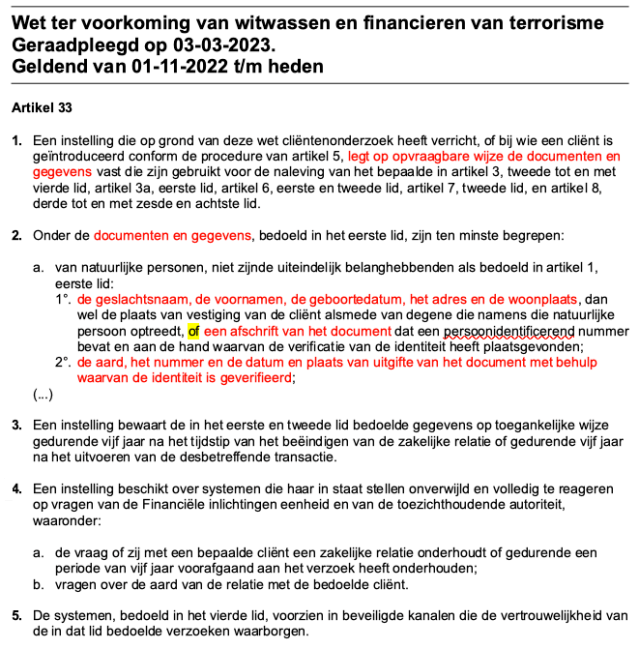
Onderstaande tweet van het ministerie bevat onjuiste informatie: alleen bestaande trusts hebben op grond van het overgangsrecht van 1 november 2022 tot 1 februari 2023 de tijd om zich in te schrijven.

Op de site is niet te vinden wat onder ‘soortgelijke juridische constructies’ wordt verstaan. Uit de tweet blijkt dat fondsen voor gemene rekening er onder vallen.


Achtergrond

De ubo-registers die Nederland kent zijn door Europa voorgeschreven. Door middel van deze registers worden persoonsgegevens openbaar gemaakt, in de veronderstelling dat daarmee misdaad kan worden bestreden.
In de werkelijkheid worden criminelen en trollen juist gefaciliteerd door deze registers en lopen ingeschrevenen extra risico’s op het gebied van gegevensbescherming en cybersecurity.

Verder zijn de registers een voorbereiding op de surveillance samenleving, die door middel van de internationale en Europese regels op het gebied van misdaadbestrijding (‘witwasbestrijding’ en bestrijding van terrorismefinanciering) wordt gecreëerd en waarbij prominente Nederlanders uit de financiële sector, die functies hebben in Europese en internationale organisaties, een belangrijke rol spelen.


Op dit blog volg ik de ontwikkelingen op dit gebied. Mijn artikelen zijn te vinden via de rubriek en Ubo-register en Fraude, witwasbestrijding, Wwft en onder meer via de tags surveillance en witwasbestrijding.

Geplaatst in Europa, Financieel recht, onder meer Wft, Wtt, Fraude, witwasbestrijding, Wwft, Ubo-register | Tags: , , , | Plaats een reactie

“Het doel van de Verenigde Staten is de hele wereld onder Amerikaanse jurisdictie te brengen” | FATCA, grondrechten

Recent werd ik geattendeerd op een in L’Echo verschenen interview (betaalmuur) met een voormalig Alstom topman, met de (vertaalde) titel:

Frédéric Pierucci, voormalig topman van Alstom: “Het doel van de Verenigde Staten is de hele wereld onder Amerikaanse jurisdictie te brengen” [*]

Dat is een titel die de Europese slachtoffers van FATCA (inleiding, berichten) zal aanspreken.

Pierrucci werd als topman van de Franse groep Alstom in 2013 gearresteerd in de VS op beschuldiging van corruptie. Volgens de Amerikanen zou hebben afgeweten van smeergeldbetalingen in Indonesië in 2004 en hij zat volgens het artikel vijfentwintig maanden in hechtenis.

In het interview legt Pierrucci uit hoe de VS aan Europa de wil oplegt (machinevertaling):

De Verenigde Staten hebben, zoals elke dominante macht, sinds de Tweede Wereldoorlog hun wet aan de rest van de wereld opgelegd. Dit is op zich niet schokkend. Zij heeft dit op intelligente wijze gedaan door middel van een verscheidenheid aan acties: anticorruptiewetgeving, sanctiewetgeving, embargo’s, enz. De VS willen bepalen wie met wie handel mag drijven en ze willen de controle houden over de belangrijkste contracten. Deze wetten zijn wereldwijd geworden, omdat ze de dollar en het digitale als verbinding hebben gebruikt.

De misdaadbestrijdingsregelgeving (zoals de anticorruptieregels, witwasbestrijdingsregels van FATF en sanctieregels) spelen volgens Pierrucci een centrale rol in de machtspolitiek van de Amerikanen.

Hij zegt dat de situatie in Oekraïne de Europese afhankelijkheid van de Verenigde Staten verder zal vergroten. Of de Democraten of de Republikeinen aan de macht zijn, maakt voor Europa niet uit. Hij vindt dat Europa moet investeren om onafhankelijk te worden van de Amerikaanse internetgiganten en moet zich ook op andere terreinen van de VS los maken.


[*] In het Frans: Frédéric Pierucci, ancien cadre d’Alstom: “L’objectif des États-Unis est de mettre le monde entier sous juridiction américaine”.

Geplaatst in Europa, Financieel recht, onder meer Wft, Wtt, Fraude, witwasbestrijding, Wwft, Grondrechten, Sanctieregels, Strafrecht | Tags: , , , , , | Plaats een reactie

Americans Abroad Renounce Citizenship to Escape Tax Law’s Clutches | FATCA,CBT, FBAR

In an earlier post on this blog I mentioned the article by Andreas Kluth for Bloomberg: Next, the Supreme Court Decides How to Punish US Expats.
On 30 September Alice Kantor wrote for Bloomberg: Americans Abroad Renounce Citizenship to Escape Tax Law’s Clutches, with the introduction:

FATCA, aimed at cracking down on offshore tax evasion, is hurting accidental US citizens who can’t open bank accounts.

It shows that the US has gone overboard in its activities to combat tax evasion and that fundamental rights of citizens are being violated. It would be good if policymakers involved in fighting crime (money laundering, tax evasion) realise that there are major risks to their systems.

Geplaatst in Bankrekening krijgen en behouden, Belastingrecht, English - posts in English on this blog, Financieel recht, onder meer Wft, Wtt, Fraude, witwasbestrijding, Wwft, Grondrechten | Tags: , , , , , | Plaats een reactie

IMF added its own publication to the avalanche of beneficial ownership publications | AML, CFT

Under the name “Unmasking Control: A Guide to Beneficial Ownership Transparency” IMF added its own publication to the avalanche of beneficial ownership publications.
It explains the reasons for the publication as follows:

Revelations from many data leaks, court cases, and media reports are a constant reminder about how easy it is to abuse companies and other types of legal entities for money laundering, terrorist financing, and many other crimes with impunity when the beneficial owners—the real persons who own and control these legal entities—are hidden. Not knowing beneficial ownership information negatively affects countries’ economies. It allows criminals to misuse these entities to hide their identities and the criminal origins of their assets, and to enjoy the proceeds of crimes, which produces all sorts of economic distortions, negatively impacts economic growth, and allows criminals to infiltrate and take control of the legal economy. This book is a guide for practitioners, policymakers, and other researchers to establish comprehensive frameworks for holding beneficial ownership information. It proposes questions to guide strategic thinking and discussion about the establishment of an effective system of beneficial ownership information, for anti-money laundering purposes. This book also sets out how an effective beneficial ownership framework can reduce opportunities for corruption, support efforts against tax evasion, help tackle illicit financial flows, protect national security interests, and benefit procurement transparency.

It is the familiar monotonous sound of anti-money laundering (AML) and countering terrorist financing (CFT) propaganda and is neglecting the detrimental effect of the AML/CFT systems that the concept of beneficial ownership is part of. These systems will lead to a surveillance society if something is not done soon.

Geplaatst in English - posts in English on this blog, Financieel recht, onder meer Wft, Wtt, Fraude, witwasbestrijding, Wwft, Grondrechten, Ubo-register | Tags: , , , , , , , | Plaats een reactie

Criminelen grasduinen in gegevens Belastingdienst

Gisteren verscheen in het NRC het artikel van Jan Meeus, “Gegevens van Belastingdienst zijn goudmijn voor criminelen“, waaruit blijkt dat topcriminelen persoonsgegevens van doelwitten konden opvragen via corrupte medewerkers van de Belastingdienst. Meeus schrijft dat medewerkers van de dienst om technische redenen niet gelogd worden:

De systemen van de Belastingdienst zijn niet in staat te achterhalen welke informatie medewerkers hebben opgevraagd over individuele burgers. Het gaat specifiek om het bekijken van informatie; als medewerkers mutaties uitvoeren, worden die wél bewaard. Maar het is technisch niet mogelijk om van iedereen die bij de Belastingdienst werkt bij te houden welke informatie ze over een lange periode hebben opgevraagd.

Het is te bizar voor woorden dat het Ministerie van Financiën criminaliteitsbestrijding uitbesteedt aan de private bedrijven zoals banken [*] en dat het ministerie het eigen huiswerk niet op orde heeft.

Nog erger: het ministerie faciliteert de zware criminaliteit in plaats van het te bestrijden.

Een van de problemen van de overheid is dat de eigen cybersecurity niet op orde is. Want bij gevoelige functies hoort dat zoekacties gelogd worden en dat niet iedereen overal toegang toe heeft.


[*] Bekend onder de naam ‘witwasbestrijding’, maar dit omvat alle soorten criminaliteit behalve datgene dat geen financiële voordelen oplevert. Het is gebaseerd op Europese regels die in Nederland zijn geïmplementeerd via de Wet ter voorkoming van witwassen en financieren van terrorisme (Wwft).


Berichten op dit blog over cybersecurity Nederlandse overheidcybersecurity in de financiële sectorWet gegevensverwerking door samenwerkingsverbandenRDW-datalekfraude, witwasbestrijding en Wwft.


Aanvulling 10 januari 2023
Belastingambtenaar Mustapha E. speelde illegaal gegevens door en had 920.000 euro in huis, 11 oktober 2022.

Geplaatst in Belastingrecht, Financieel recht, onder meer Wft, Wtt, Fraude, witwasbestrijding, Wwft, Strafrecht | Tags: , , , , , , , | Plaats een reactie

Judge ruled against the Association of Accidental Americans in US lawsuit regarding renunciation | FATCA, CBT

The Association of Accidental Americans (AAA) end of September announced that it has appealed the judgment of the Washington, D.C. federal court which dismissed their lawsuit challenging the U.S. Department of State’s suspension and delay of voluntary renunciation services. AAA-chairman Lehagre commented on 30 September:

👉 In some US embassies, waiting times to renounce US citizenship are still extremely long. Which is a real problem when you know how much the #FATCA legislation poses such worries to accidental Americans.

In the press release (source) AAA writes:

Association of Accidental Americans Appeals District Court’s Dismissal of Lawsuit Challenging State Department’s Suspension and Delay of Renunciation Services Due to COVID-19

PARIS (September 29, 2022) – The Association of Accidental Americans, a French non-profit society, together with additional individual plaintiffs, have appealed the judgment of the Washington, D.C. federal court which dismissed their lawsuit challenging the U.S. Department of State’s suspension and delay of voluntary renunciation services. Case no. is 1:21-cv-2933 (D.D.C. Sept. 28, 2022).

Plaintiffs, U.S. citizens residing in Europe and Asia, wish to renounce their U.S. citizenship due to the U.S. government’s discriminatory treatment of its citizens residing abroad, especially in the areas of financial privacy and taxation.

Ever since the passage of the Foreign Account Tax Compliance Act (“FATCA”) — a bulk data collection program requiring foreign financial institutions to report to the IRS detailed information about the accounts of U.S. citizens living abroad– U.S. citizens abroad have been treated as financial pariahs by foreign financial institutions. In many countries, banks have closed or frozen accounts maintained by U.S. persons. Elsewhere, banks refuse to provide basic services to U.S. citizens, imposing unreasonable limitations on their ability to carry out their business and daily affairs.

Plaintiffs and the government filed motions for summary judgment and, after extensive briefing, the court issued its 20-page memorandum opinion. At the outset, the court rejected the government’s argument that the court lacked jurisdiction to adjudicate the case. In so ruling, the court concluded that plaintiffs suffered a concrete injury which can be redressed by the court.

On the merits of the case, the Association argued in a case of first impression that the plaintiffs have a fundamental right to renounce their citizenship under the Constitution, which was infringed when the government suspended and delayed renunciation services at consular posts around the globe due to the COVID-19 pandemic. Electing not to resolve this cardinal issue, the court concluded that even if there is a fundamental right to expatriate, there is no authority suggesting that the government must allow citizens to renounce quickly despite the severe hardship U.S. citizenship has caused Accidental Americans.

The court also dismissed plaintiffs claims that were brought under the Administrative Procedure Act. While sensitive to the “serious” plight of Accidental Americans, the court concluded that the Department of State has not acted unreasonably in delaying renunciation services, comparing the waiting times for non-immigrant visa services to those of renunciation services.

The Association of Accidental Americans is also awaiting judgment in a lawsuit challenging the U.S. government’s exorbitant $2,350 fee voluntary renunciation. That case that has been ripe for a decision over a year ago, is also based on the fundamental constitutional right of all U.S. citizens to expatriate.

Statement by Fabien Lehagre, founder and president of the Association of Accidental Americans:

Our fight for the rights of Accidental Americans continues to the appellate level. While disappointed in the ruling, we are happy that the court acknowledged the financial burdens caused by FATCA and related legislation on Accidental Americans. We are also pleased that the court left open for decision by another court our main argument that voluntary expatriation is a fundamental constitutional right, the restrictions of which should be stricken unless they are necessary for a compelling governmental interest.

We have appealed the decision and will raise our arguments before the Court of Appeals. It is our hope that the Court of Appeals will give the right to expatriate the importance it deserves. Our struggle for liberty has just begun.

The Plaintiffs are being represented by L. Marc Zell and Noam Schreiber of the international law firm, Zell & Associates International Advocates, LLC. http://www.fandz.com.

For further information please contact :

Fabien Lehagre
Association of Accidental Americans
president@americains-accidentels.fr

Marc Zell
Zell & Associates International Advocates, LLC
marc.zell.law@gmail.com


More information:

Geplaatst in Bankrekening krijgen en behouden, English - posts in English on this blog, Financieel recht, onder meer Wft, Wtt, Fraude, witwasbestrijding, Wwft, Grondrechten, ICT, privacy, e-commerce | Tags: , , , , | Plaats een reactie