The customers of professional football clubs | part 2 of Horrors of European legislation against crime (AML/CFT)

It is fascinating to see that the Committee on Economic and Monetary Affairs (ECON) and the Committee on Civil Liberties, Justice and Home Affairs (LIBE) of the European Parliament do not understand what ‘anti-money laundering’ (AML) and ‘combating terrorist financing’ (CFT) are about.

They want to add football clubs as obliged entities and their reasoning is funny, in their draft report they write (markup by me):

High-level professional football clubs and football associations, as well as sport agents in the football sector, are therefore entities posing high risks and should therefore be added to the list of obliged entities.

I am dumbfounded…

Do the committees know what AML/CFT is about?

In the system of European AML legislation, a high risk should result in a group of entities being classified in Section 4 of Chapter III of the regulation (enhanced customer due diligence) and in adding such types of entities to annex III of the regulation (higher risk factors).

The presumption is that a suitable company is designated as a obliged entity under AML legislation. Because banks facilitate financial transactions, it was assumed that they are suitable for detecting crime (‘money laundering’) and for that reason in the beginning of AML legislation they were designated. Later, a number of other companies with similar activities (such as crypto providers) were added. The designation as a obliged entity should have a well-founded reason, which is lacking here.

There is also the question of who the customers of a football club are that the club has to conduct customer due diligence on. Should football clubs collect personal data from all their supporters and investigate the origin of their funds? Will they be able to respect the data protection rights of their ‘customers’?

It sounds like a very bad idea to designate football clubs as obliged entities.


Quotes from the draft report

Proposed new recital:

(18a) According to a report from the FATF of July 2009 entitled ‘Money Laundering through the Football Sector’, “the professional football market has undergone an accentuated growth due to a process of commercialisation. Money invested in football surged mainly as a result from increases in television rights and corporate sponsorship. Simultaneously, the labour market for professional football players has experienced unprecedented globalisation – with more and more football players contracted by teams outside their country and transfer payments of astounding dimensions. The cross border money flows that are involved may largely fall outside the control of national and supranational football organisations, giving opportunities to move and launder money. At the same time money from private investors is pouring into football clubs to keep them operating and can give the investor long term returns in terms of media rights, ticket sales, proceeds of sales of players and merchandising.” In its report of 24 July 2019 to the European Parliament and the Council on the assessment of the risk of money laundering and terrorist financing affecting the internal market and relating to cross-border activities, the Commission assessed professional football and stated that “whilst it remains a popular sport it is also a global industry with significant economic impact. Professional football’s complex organisation and lack of transparency have created fertile ground for the use of illegal resources. Questionable sums of money with no apparent or explicable financial return or gain are being invested in the sport.” Professional football is therefore a new sector posing high risks and high-level professional football clubs, along with sports agents in the football sector and football associations in Member States which are members of the Union of European Football Associations, should be considered obliged entities for the purposes of this Regulation.

Proposed new definitions (article 2):

(14a) ‘high-level professional football club’ means a legal entity established in a Member State which owns or manages a professional football club of which at least one team plays in the championship or championships of the highest level of the competition in that Member State;
(14b) ‘sports agent in the football sector’ means a person that provides private job placement in the football sector for prospective paid football players or for employers with a view to signing an employment contract for paid football players;

New obliged entities (article 3 AMLR)

(la) sports agents in the football sector;
(lb) high-level professional football clubs;
(lc) football associations in Member States which are members of the Union of European Football Associations.


More information:


This is part 2 of the series Horrors of European legislation against crime (AML/CFT) that describes the European plans to fundamentally change AML/CFT legislation.


Addition 27 May 2024
According to the latest text of the AML Package football clubs only have to do KYC on certain transactions.

Geplaatst in English - posts in English on this blog, Europa, Financieel recht, onder meer Wft, Wtt, Fraude, witwasbestrijding, Wwft | Tags: , , , | Plaats een reactie

Europe’s oligarchs and oligarchs in the Netherlands | AML, CFT

The Committee on Budgetary Control of the European Parliament on 10 November 2021 published a draft report with the catchy title “fight against oligarch structures, protection of EU funds from fraud and conflict of interest“.

In the draft report the term ‘oligarch’ is used for all influential people (markup by me):

Oligarch structures
1. Notes that, in today’s society, ‘oligarchy’ refers to any small, cohesive class or group that is in a position to make decisions or command others in either political or non-political contexts or rule a political community in its own interests, without regard for the rule of law and other democratic rules and sometimes in infringement of their fundamental principles; notes that in an oligarchy, political elites misdirect public funds from the EU or national budgets to serve their private interest and often rely on businesspeople who act on their behalf in a structure where real beneficiaries and beneficial owners are usually concealed; notes that the extreme concentration of political and financial elites can lead to state capture;
2. Adds that in the current EU political context, the term ‘oligarchy’ is used as a way of pointing out the influence of the wealthy and powerful in politics and government, and that of the economic, financial and industrial actors who are able to exercise influence that is typically used to benefit the few at the expense of the many; highlights that members of national governments and other holders of political positions are part of the oligarchy in some Member States and have actively sought to use EU funds to benefit themselves financially;

According to the draft the occurrence of oligarchic structures has reached unprecedented levels in the EU in recent years (nr. 16). A peculiar statement, is there any study that can be used to support this statement?

Who are the Dutch oligarchs?
It will be interesting to see who are the oligarchs in the Netherlands. Can we find them among the old ‘regentenfamilies‘, like the Donners and the Brenninkmeijers? Or are they not oligarchs because they respect fundamental principles?
Or should we look at those involved in the management of large influential companies?
Are there indications that there are Dutch oligarchs with relations to criminal groups?

If there are oligarchs in the Netherlands, why are they not considered to be ‘politically exposed persons‘ (PEPs) under AML/CFT-legislation, instead of the hard-working decent people who now are now supposed to be high risk?

A lot of questions and no answers.

Final remark
Perhaps this parliamentary document should be considered only as a political marketing statement and can be put aside further. If it were more than that, I am not impressed with the way the term ‘oligarch’ is handled and expect more from the members of the europarliament.


More information:

Report:

Politically exposed persons in AML/CFT:

  • PEPs in AMLD4: article 3 (9), (10) and (11), see below.
  • List of Dutch PEPs, considered to be a high risk of AML/CFT.

Read also the blog by Ewoud Sanders (Dutch), Zijn er ook niet-Russische oligarchen? (Are there any non-Russian oligarchs?). Introduction (machinetranslation):

Is it difficult to become an oligarch? Not particularly. The first thing you need is a perverse amount of money. That you have earned partly through corruption and on which you, for example with the help of very expensive Dutch lawyers, pay little or no tax. Then, you spend most of that money on things for yourself. Very important is a yacht that is bigger than that of your fellow oligarchs, because everyone must be able to see that you have the biggest. Then buy a colossal building in Londongrad. Put a few extremely expensive cars in front of it – preferably gold ones.
You see: a child can do the washing.


Paragraph on oligarchs in the draft report of 2 March 2022:

Oligarch structures
1. Notes that, in today’s society, ‘oligarchy’ refers to any small, cohesive class or group that is in a position to make decisions or command others in either political or non- political contexts or rule a political community in its own interests, without regard for the rule of law and other democratic rules and sometimes in infringement of their fundamental principles; notes that in an oligarchy, political elites misdirect public funds from the EU or national budgets to serve their private interest and often rely on businesspeople who act on their behalf in a structure where real beneficiaries and beneficial owners are usually concealed; notes that the extreme concentration of political and financial elites can lead to state capture;
2. Adds that in the current EU political context, the term ‘oligarchy’ is used as a way of pointing out the influence of the wealthy and powerful in politics and government, and that of the economic, financial and industrial actors who are able to exercise influence that is typically used to benefit the few at the expense of the many; highlights that members of national governments and other holders of political positions are part of the oligarchy in some Member States and have actively sought to use EU funds to benefit themselves financially;
3. Notes with particular concern that the occurrence of such oligarchic groups, which do not refrain from using government tools or criminal practices, or from supporting criminal groups, has reached an unprecedented magnitude in the past several years; notes with extreme concern that politically connected oligarch networks can capture national media markets and interfere with the workings of democratic public spheres;
4. Is concerned that oligarchic systems are often connected to widespread corruption, tight control over media and a judicial system which is not independent from the oligarchs themselves; emphasises that, in order to protect themselves, oligarchic groups seek to gain control over the media and the judiciary so as to avoid media exposure of possible criminal activities and prosecution;
5. Recalls that Parliament’s position on corruption is that it not only seriously harms the Union’s financial interests but also poses a threat to democracy, fundamental rights and the rule of law; is worried by the detrimental impact of corruption on citizens’ trust in institutions;
6. Considers that strong and effective anti-corruption policies and bodies, as well as control systems and an independent judiciary, ensuring the effective functioning of the rule of law, promoting competition, enhancing transparency and assuring the functional implementation of public procurement rules and free access to markets are fundamental to prevent oligarchs from seizing control of the economy and financial markets, which would result in them self-reinforcing to an even greater degree; insists that the EU promote transparency in the spending of EU and national funds by carrying out more efficient data collection and by strengthening the rules related to it, especially as regards final beneficiaries and beneficial owners, and that it monitor closely and enforce the proper implementation of such rules; calls on the Commission, in this context, to step up its efforts and reinforce its cooperation with the Member States in this direction;


PEPs in AMLD4
Consolidated version of 30 June 2021:

(9) ‘politically exposed person’ means a natural person who is or who has been entrusted with prominent public functions and includes the following:

(a) heads of State, heads of government, ministers and deputy or assistant ministers;
(b) members of parliament or of similar legislative bodies;
(c) members of the governing bodies of political parties;
(d) members of supreme courts, of constitutional courts or of other high-level judicial bodies, the decisions of which are not subject to further appeal, except in exceptional circumstances;
(e) members of courts of auditors or of the boards of central banks;
(f) ambassadors, chargés d’affaires and high-ranking officers in the armed forces;
(g) members of the administrative, management or supervisory bodies of State-owned enterprises;
(h) directors, deputy directors and members of the board or equivalent function of an international organisation.

No public function referred to in points (a) to (h) shall be understood as covering middle-ranking or more junior officials;

(10) ‘family members’ includes the following:

(a) the spouse, or a person considered to be equivalent to a spouse, of a politically exposed person;
(b) the children and their spouses, or persons considered to be equivalent to a spouse, of a politically exposed person;
(c) the parents of a politically exposed person;

(11) ‘persons known to be close associates’ means:

(a) natural persons who are known to have joint beneficial ownership of legal entities or legal arrangements, or any other close business relations, with a politically exposed person;
(b) natural persons who have sole beneficial ownership of a legal entity or legal arrangement which is known to have been set up for the de facto benefit of a politically exposed person.

Geplaatst in English - posts in English on this blog, Europa, Financieel recht, onder meer Wft, Wtt, Fraude, witwasbestrijding, Wwft, Sanctieregels | Tags: | 1 reactie

Violation of data protection principles and discrimination | part 1 of Horrors of European legislation against crime (AML/CFT)

In certain areas European legislation is gaining importance. One of these areas is the legislation against crime, also known as ‘anti-money laundering’ (AML) and ‘combating terrorist financing’ (CFT). In reality, it is a form of privatisation of government tasks, to the detriment of citizens and society.

Under these regulations, private companies like banks (‘obliged entities’) must fight crime. One of the main elements of the AML/CFT regulations is that obliged entities have to conduct a client due diligence (CDD) under threat of high penalties and personal liability of directors when they do not comply. The dark shadows of AML/CFT legislation are becoming very clear, especially banks are showing that future will be dark, with discriminatory de-risking practices and increasing tariffs due to high CDD costs.

Currently Europe is working on new AML/CFT legislation that will increase the negative effects of privatisation of government tasks. One of the main elements of the new legislation is the Anti-Money Laundering Regulation (‘AMLR’), which contains a complete overhaul of the AML/CFT regulations.

It is disconcerting to see that Europe through AMLR wants to undermine fundamental European legal principles in order to fight crime. The European Commission is creating a surveillance society through AML/CFT legislation.

Some examples are given in this article.

Undermining GDPR
[a] Current regulation is already threatening the data protection rights of European citizens, due to the large amount of data obliged entities have to collect, due to the unnecessary and unjustifiably public register of ‘beneficial owners’ (with a too broad definition of ‘beneficial owner’) and due to other problematic obligations.

[b] The European Commission proposes to undermine the data protection principles of GDPR further by allowing obliged entities through the first paragraph of article 55 AMLR to collect personal data on political opinions, sexual orientation etcetera. In the amended version of the LIBE ECON commission the paragraph will be as follows (mark-up by me):

1. To the extent that it is strictly  necessary for the purposes of preventing  money laundering and terrorist financing,  obliged entities may process special  categories of personal data on a case-by-case basis relating to racial or ethnic  origin, political opinions, religious or  philosophical beliefs, or trade union  membership and genetic data, biometric  data for the purpose of uniquely  identifying a natural person, data  concerning health or data concerning a  natural person’s sex life or sexual  orientation referred to in Article 9(1) of  Regulation (EU) 2016/679 and personal  data relating to criminal convictions and  offences referred to in Article 10 of that  Regulation subject to the safeguards  provided for in paragraphs 2 and 3.

Of course obliged entities like banks will use this as a pretext to collect unnecessary personal data.
To my opinion collecting this type of data should be forbidden, unless – after a strict procedure in which data protection authorities are involved – the necessity of collecting such data is proven.

[c] Without any explanation or justification the Commission proposes that all obliged entities have to collect extra personal information on their customers:

  • Article 18, first section, (a)(iii): nationality or nationalities.
  • Article 18, first section, (a)(iv): the occupation, profession or employment status.

Nationality is also included in article 44 on beneficial owners.
No explanation is given why this information is relevant for AML/CFT.

[d] Without any explanation or justification the Commission proposes (article 20) that all obliged entities have to obtain information of their customers on:

(b) the estimated amount and economic rationale of the envisaged transactions or activities;
(c) the source of funds;
(d) the destination of funds.

No attention is paid to the type of activity the entity is doing for the customer and no attention is paid to the type of customer and the type of transaction.  It will lead to unnecessary collection of personal information, with all the data protections risks attached. If data minimisation principles are respected, such an obligation is limited to certain obliged entities and to situations in which such information is necessary.

[e] Article 42 of the Commission’s proposal includes “links with family members of managers or directors/those owning or controlling the corporate entity” as ‘control via other means’ over a corporate entity. The meaning of ‘links’ is not explained. This will lead to unnecessary inclusion of family members in the definition of ‘beneficial owner’ and their registration in the register of beneficial owners.
Also the consequence is that obliged entities will require information regarding family members of all managers, directors, owners and controllers; compliance providers will start collecting that information also. Unnecessary violation of the data protection rights of family members is the consequence of this unnecessary and unfounded way of broadening the definition of beneficial owner.

[f] The new text of Annex I (indicative list of risk variables) proposed by the Commission will lead to additional data protection risks, as the Commission requests the obliged entities to determine the risks of their customers based on the following personal data (mark-up by me):

(i) the customer’s and the customer’s beneficial owner’s business or professional activity;
(ii) the customer’s and the customer’s beneficial owner’s reputation;
(iii) the customer’s and the customer’s beneficial owner’s nature and behaviour; (…)
(vi) the jurisdictions to which the customer and the customer’s beneficial owner have relevant personal links;

Of course no explanation or justification is provided by the European Commission. The consequence will be that obliged entities and their compliance information providers will start collecting extra personal data to be able to do the requested judgment (possibly through analysis with artificial intelligence). Highly dangerous!

Discrimination based on nationality
The ECON / LIBE draft report on AMLR proposes to add nationality as a high risk factor in annex III of AMLR (replacing annex III of the current AML/CFT regulation). It is an important principle that discrimination on the basis of nationality is prohibited.

This is the proposal of the committee:


It means that all people with the nationality of a state that is considered to be high risk [1], will be discriminated against by obliged entities.
Example: all Iranians in the Netherlands – even when they live here almost all of their life – are considered to be a probable high risk; obliged entities have to take extra compliance measures to mitigate the risks (so they will try to terminate the relationship). Note: Iran is one of the countries that has made it impossible to terminate the nationality.

Final remarks
Europe is moving in the wrong direction. It is preparing us for a surveillance society. Hopefully organisations in the area of fundamental rights will be alert and point out to the European Commission that proposals that harm data protection or other fundamental rights are undesirable.


Notes

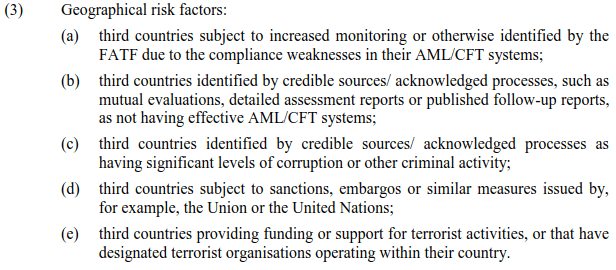
[1] According to point (3) of the draft most countries of the world are areas of higher risk:

There are many lists of high(er) risk countries, not only FATF but also the list of the European Commission and the list of the Dutch AMLC.


More information:


This is part 1 of the series Horrors of European legislation against crime (AML/CFT) that describes the European plans to fundamentally change AML/CFT legislation.


Amendment 27 June 2022
The quotation on Article 55 AMLR was from the committee’s proposal, so I have amended that paragraph. The European Commission refers in the first paragraph to Articles 9 and 10 GDPR.

Addition of 27 June 2022
EDPB commented on the AMLA package, see my blog post and the EDPB page of 20 May 2022. Unfortunately, the EDPB’s criticism is limited to, inter alia, Article 55(1) and does not address other points that I mention in my blog.

Geplaatst in English - posts in English on this blog, Europa, Financieel recht, onder meer Wft, Wtt, Fraude, witwasbestrijding, Wwft, Grondrechten, ICT, privacy, e-commerce | Tags: , , , , , , , , , | Plaats een reactie

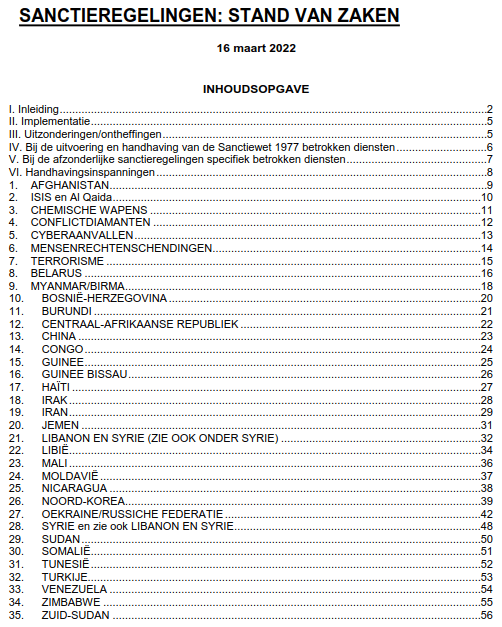
Nieuw overzicht Europese sanctieregels

Het Ministerie van Financiën heeft deze maand een nieuw overzicht van Europese sanctieregelingen bekend gemaakt: pdf bestand. Vanwege de actualiteit zal veel aandacht uitgaan naar de sancties inzake Oekraïne en Rusland, rubriek 27.


Let er op dat de sanctieregels dagelijks kunnen wijzigen, dus raadpleeg altijd de meest recente gegevens.


Een inleiding sanctieregelgeving hier te vinden op dit blog.

Geplaatst in Europa, Financieel recht, onder meer Wft, Wtt, Sanctieregels | Tags: | Plaats een reactie

Stichting donateursbelangen wil opkomen tegen witwasbestrijdingsexcessen | Wwft, not-for-profit

De Stichting Donateursbelangen, opgericht in december 2021, wil opkomen tegen witwasbestrijdingsexcessen, zo lees ik hier, al kan ik uit de navolgende formulering niet afleiden dat men goed op de hoogt is van de witwasbestrijdingsregelgeving:

Ambitie 6: Privacy versus KYC/WWFT/WFT
De privacy van donateurs is meer en meer in het geding onder wet- en regelgeving m.b.t. anti witwas en terrorismefinanciering regelgeving die ook belangrijk is maar waarbij dit niet ten koste van de privacy van donateurs mag gaan.
Stichting Donateursbelangen zet zich in voor een normale verhouding tussen wat wettelijk in het kader van KYC, wwft en Wft gevraagd en vastgelegd moet worden met betrekking tot privacygevoelige data van donateurs door betaalinstellingen, donatieplatformen en non-profits in relatie tot de Europese privacy wetgeving.
Deze 2 wetten zouden elkaar aan moeten vullen waarbij de wwft en wft invulling kan geven hoe data vastgelegd mag worden maar meer en meer geldt dat binnen de wwft en wft wetgeving er meer vastgelegd wordt dan bedoeld is vanuit deze 2 wetten.

Het neemt niet weg dat het een goede zaak is dat een gespecialiseerde organisatie hier aandacht aan besteedt, nu er de nodige ingrijpende wetgeving in aantocht is, lees onder meer dit artikel en andere berichten in de rubriek donateurstransparantie.


Aanvulling 31 mei 2022
Lees ook het artikel op fondsenwerving.nl, Sector schrijft nieuwe brandbrief aan minister Kaag over gevolgen anti-terreur en witwasmaatregelen, 20 april 2022. Lees de volledige brief aan de minister van Financiën.

Geplaatst in Financieel recht, onder meer Wft, Wtt, Fraude, witwasbestrijding, Wwft | Tags: , , , , | 1 reactie

European Parliament | LIBE meeting on implementation GDPR

On 17 March the LIBE commission of the European Parliament held a meeting on the implementation of GDPR. Information is found in the press release on the meeting. One of the guests was Max Schrems, the famous dataprotection campaigner:

Kicking off the third panel, Maximilian Schrems (Honorary Chairman, European Center for Digital Rights NOYB) argued that procedural issues are currently the main problem for cross-border cases. He described issues with the availability and responsiveness of some data protection authorities. At the same time, the scope of complaints is defined differently across Europe: for example, in Austria, it is defined by the complainant, and in Ireland, by the national authority. Commenting on the one-stop-shop, Schrems argued that the mechanism is undermined by national authorities that do not participate in it with goodwill, for example by withholding evidence and documents. Also, some authorities are more transparent than others, publishing many more documents annually with the same operating budget. Efficiency can be an important factor alongside resources, argued Schrems.

European dataprotection EDRi before the meeting published recommendations for better GDPR enforcement:

Geplaatst in Europa, Grondrechten, ICT, privacy, e-commerce | Tags: , , , | Plaats een reactie

Waarom 2G een pokkenwet is

Jurjen Boorsma schreef voor Mr. het artikelWaarom 2G een pokkenwet is‘, waarin hij de geschiedenis van de vaccinatie tegen pokken [*] in herinnering roept. Aan het slot schrijft hij:

Wat je dus moet verwachten van deze kleine historie? Dat rechters niks doen (zie ook: hoger beroep avondklok). Dat vaccinatiegraad arbitrair is. Dat dwang en drang gebruikelijk zijn, en gewetensbezwaren omstreden. En dat verder iedereen de pokken kan krijgen.


[*] Overigens is de vaccinatie tegen pokken niet te vergelijken met de vaccinatie tegen corona.


Aanvulling 31 mei 2022
Een kritisch geluid komt ook van Christiaan Alting von Geusau, die bij Clingendael het artikel Brachten de coronamaatregelen de rechtsstaat in gevaar? publiceerde. Hij signaleert de onderdrukking van wetenschappelijk tegengeluid en bangmakerij en concludeert:

Het democratische stelsel in westerse landen zal zich anno 2022 en daarna in staat moeten stellen om breed en openhartig te bediscussiëren en kritisch te evalueren of de drastische beperkingen van grond- en vrijheidsrechten de afgelopen twee jaar werkelijk gerechtvaardigd waren. Wanneer dit ook tot politieke en juridische consequenties leidt indien dit niet het geval was, kan de rechtsstaat daardoor worden gesterkt.
Daarbij moet het evenredigheidsbeginsel in de evaluatie zeer zorgvuldig worden toegepast. Verder moeten ook wetenschappelijke inzichten en kritische analyses die niet overeenstemmen met de conclusies en opinies van de experts waarop het nationale regeringsbeleid en de WHO-uitspraken zijn gebaseerd voldoende aan bod kunnen komen.

Aanverwant aan het artikel van Boorsma maar beschaafder geformuleerd: het artikel Abschied von der Verhältnismäßigkeit? (afscheid van de evenredigheid) geschreven door Stephan Rixen voor Verfassungsblog. Over een vaccinatieplichtuitspraak van het Bundesverfassungsgericht schrijft hij (machinevertaling):

De uitspraak van 27 april 2022 ruimt met volmaakte dogmatische kunstzinnigheid bijna alles uit de weg wat de wetgever het leven moeilijk zou kunnen maken. De vraag blijft derhalve gerechtvaardigd waarom het Bundesverfassungsgericht “de evenredigheidstoets op nul heeft gezet”. Wie de vraag niet objectief vindt of zelfs een soort majesteitsschennis vermoedt, moet denken aan de woorden van de voormalige voorzitter van het Bundesverfassungsgericht, Jutta Limbach:3) “[Alle] overheidsinstellingen [moeten] kritische tegenvragen verdragen en daarmee omgaan. Dit geldt des te meer voor het Bundesverfassungsgericht omdat de leden ervan – in tegenstelling tot politici – niet ter verantwoording kunnen worden geroepen bij periodieke verkiezingen. Het strekt het hof tot eer dat het nooit gespaard is gebleven van kritiek.” Het Bundesverfassungsgericht zal hopelijk snel inzien hoe belangrijk het is dat zijn pandemie- en vaccinatieplichtjurisprudentie niet gespaard blijft van (zelf)kritiek.

Duitstalig origineel:

Der Beschluss vom 27. April 2022 räumt mit perfekter dogmatischer Artistik nahezu alles ab, was dem Gesetzgeber das Leben schwer machen könnte. Daher bleibt die Frage berechtigt, wieso das BVerfG „die Verhältnismäßigkeitsprüfung auf Leerlauf gestellt“ hat. Wer die Frage für unsachlich hält oder gar eine Art Majestätsbeleidigung vermutet, sollte sich an die Worte der früheren Präsidentin des BVerfG, Jutta Limbach, erinnern:3) „[A]lle öffentlichen Institutionen [müssen sich] kritische Gegenfragen gefallen lassen und sich mit diesen auseinandersetzen. Das gilt für das Bundesverfassungsgericht umso mehr, als seine Mitglieder – im Gegensatz zu den Politikern – nicht in periodisch wiederkehrenden Wahlen zur Verantwortung gezogen werden können. Das Gericht ist zu seinem Vorteil nie von Kritik verschont geblieben.“ Das BVerfG wird, so ist zu hoffen, bald einsehen, wie wichtig es ist, dass seine Pandemie- und Impfpflicht-Rechtsprechung nicht von (Selbst-)Kritik verschont bleibt.

Geplaatst in Grondrechten | Tags: , | Plaats een reactie

Stärkung des Datenschutzes in der Schweiz | Totalrevision des Bundesgesetzes über den Datenschutz (DSG)

In der Schweiz ist die Revision des Datenschutzgesetzes im Gange, die ab dem 1. September 2023 zu Änderungen der Vorschriften führen wird. Ursprünglich sollten die Änderungen am 1. Januar 2023 in Kraft treten, aber dieser Termin wurde nicht eingehalten.


Weitere Informationen:

Vernehmlassungsverfahren betreffend die Verordnung zum Datenschutzgesetz (PDF):

Geplaatst in ICT, privacy, e-commerce | Tags: , , , | Plaats een reactie

European citizens are harassed by FATCA and IRS does nothing with the data…

According to a statement by someone in the US tax department, the data obtained via FATCA is not used…

See Written Testimony of Charles P. Rettig, Commissioner Internal Revenue Service before the House Ways and Means Committee, Subcommittee on Oversight on the Filing Season and IRS Operations:

Because of our current funding and staffing limitations across our enforcement functions, we are forced to make difficult decisions regarding priorities, the types of enforcement actions we employ, and the service we offer. Limited IT resources preclude us from building adequate solutions for efficiently matching or reconciling data from multiple sources. As a result, we are often left with manual processes to analyze reporting information we receive. Such is the case with data from the Foreign Account Tax Compliance Act (FATCA). Congress enacted FATCA in 2010, but we have yet to receive any significant funding appropriation for its implementation.

This is shocking!

The Dutch Accidental Americans group has sent an e-mail to the members of the Dutch parliament (machine translation) [*]:

For 7 years now, people have been fighting the consequences of the FATCA-IGA, which results in Financial Institutions sending personal (financial) data via the Dutch Tax Authorities to the US-IRS.
All this is in theory designed to catch tax evaders, but the result is that instead more than 46,000 Dutch citizens and their families are seriously harmed in their rights.

On 17 March 2022, Mr Charles Rettig of the US IRS reported in a written report that the IRS does absolutely nothing with the received “FATCA” data… (…)

This report by the IRS shows that:
– the sending of this data has no purpose whatsoever, nothing is done with it.
– the data sent by the Dutch tax authorities to the IRS is out of all proportion, so much data is sent that the IRS does not know what to do with it.
Under the GDPR/AVG regulations, these are important conditions for sending personal data to the US.
This removes any argument for continuing to send this FATCA data to the IRS.

Besides the above IRS report, we have an extensive file with evidence that the FATCA-IGA is in violation of the GDPR/AVG regulations and also other rights of a Dutch citizen.
Both the Ministry of Finance and the AP have been informed of this by us.
Even though the EDPB and the European Parliament have explicitly requested that the FATCA-IGA be re-examined against the current GDPR/AVG regulations, both the Ministry of Finance and the AP do not want to comply.

When will you intervene?


Deskandchair on twitter:


[*] Original in Dutch:

Al 7 jaar wordt strijd gevoerd tegen de gevolgen van de FATCA-IGA die ertoe lijdt dat Financiële Instellingen persoonlijke (financiële) data via de Nederlandse Belastingdienst aan de VS-IRS sturen.
Allemaal bedacht om in theorie belastingontduikers te vangen, maar het resultaat is dat in plaats daarvan meer dan 46.000 Nederlandse staatsburgers en hun gezinnen ernstig geschaad worden in hun rechten.

Op 17 maart 2022 heeft dhr Charles Rettig van de Amerikaanse IRS in een schriftelijk verslag melding gemaakt van het feit dat de IRS helemaal niets doet met de ontvangen “FATCA” data… (…)

Deze rapportage van de IRS toont aan dat:
• het zenden van deze data geen enkel doel heeft, er wordt helemaal niets mee gedaan.
• de data die de Nederlandse belastingdienst aan de IRS stuurt buiten elke proportie is, er wordt zoveel gestuurd dat de IRS er geen raad mee weet.
Op basis van de GDPR/AVG regelgeving zijn dit wel belangrijke voorwaarden om persoonlijke data naar de VS te mogen sturen.
Daarmee vervalt elk argument om door te blijven gaan met het verzenden van deze FATCA data aan de IRS.

Naast bovenstaande rapportage van de IRS hebben wij een uitgebreid dossier met bewijzen dat de FATCA-IGA strijdig is met de GDPR/AVG regelgeving en ook andere rechten van een Nederlandse Staatsburger.
Zowel het ministerie van Financiën, als ook de AP, zijn daarvan door ons op de hoogte gesteld.
Zelfs ondanks uitdrukkelijk verzoek van de EDPB én het Europees Parlement om de FATCA-IGA opnieuw te toetsen aan de actuele GDPR / AVG regelgeving, willen zowel het Ministerie van Financiën, als ook de AP, daar geen gehoor aan geven.

Wanneer grijpt U in?

Geplaatst in Belastingrecht, English - posts in English on this blog, Financieel recht, onder meer Wft, Wtt, Fraude, witwasbestrijding, Wwft | Tags: , , , | Plaats een reactie

Overheid schendt rechtsbeginselen | uitspraak Rechtbank Oost-Brabant over verschoningsrecht advocaat

Soms lijkt het er op dat de overheid in de veronderstelling leeft dat regels wel voor burgers gelden en niet voor de overheid zelf. Vooral in de misdaadbestrijding speelt dit een rol: opsporingsinstanties vinden grondrechten, zoals databeschermingsrechten en het verschoningsrecht van de advocaat, ‘lastig’.

Deze thematiek was onderwerp van een uitspraak van de Rechtbank Oost-Brabant van 22 maart jl. Onder meer constateerde de Rechtbank dat de opsporingsdiensten niet conform het bepaalde in de toepasselijke regeling (de Handleiding) hebben gehandeld inzake geheimhouderinformatie (communicatie met de advocaat). Bijvoorbeeld:

  • de geheimhouderinformatie is niet in een gesloten enveloppe aan de medewerker geheimhouders overhandigd maar medewerkers van het opsporingsteam hebben de beschikking gehad over alle gegevens (inclusief (mogelijke) geheimhouderinformatie);
  • in de werkkopie is actief gezocht naar vermoedelijke geheimhouderinformatie;
  • de medewerker geheimhouders was niet (volledig) op de hoogte van de reikwijdte van het verschoningsrecht.

Er was dus geen sprake van een incident, maar van het structureel negeren van de regels. De veroordeling is pittig:

5.3. verbiedt de Staat om, indien ten tijde van de uitoefening van de in artikel 126ng/126ug Sv bedoelde bevoegdheid in een strafrechtelijk onderzoek aan de Staat bekend is dat [eisers] dan wel één of meerderen van hen als advocaat betrokken is/zijn, gebruik te maken van die bevoegdheid voor zover het betreft gegevens die mededelingen bevatten als bedoeld in artikel 126aa, lid 2, eerste volzin van Sv, tenzij de betrokken advocaat hier toestemming voor heeft gegeven, dan wel de rechter heeft beslist dat het bezwaar van de advocaat tegen de kennisneming van deze mededelingen ongegrond is;

5.4. gebiedt de Staat om in de gevallen waarin gebruik is/wordt gemaakt van de opsporingsbevoegdheid als bedoeld in artikel 126ng/ug Sv, en waarin, nadat van die bevoegdheid gebruik is gemaakt, blijkt dat [eisers] dan wel één of meerderen van hen betrokken is/zijn als advocaat, ervoor zorg te dragen dat gehandeld wordt met in achtneming van het bepaalde in artikel 126aa Sv en artikel 4 lid 1 en 2 van het Besluit, in die zin dat:

– de opsporingsambtenaar die door de uitoefening van de in artikel 126ng/ug Sv genoemde bevoegdheid kennisneemt van mededelingen waarvan hij weet of redelijkerwijs kan vermoeden dat deze zijn gedaan door of aan een geheimhouder, de officier van justitie hiervan onverwijld in kennis stelt;
– indien de officier van justitie vaststelt dat de onder het eerste gedachtestreepje bedoelde mededelingen, mededelingen zijn als bedoeld in artikel 126aa, tweede lid, eerste volzin, van het Wetboek van Strafvordering, deze officier van justitie terstond schriftelijk de vernietiging beveelt van de processen-verbaal en andere voorwerpen, voorzover zij deze mededelingen behelzen en dat dit bevel tot vernietiging wordt nagekomen.
– dat van de vernietiging een proces-verbaal wordt opgemaakt dat wordt gezonden aan de officier van justitie.

5.5. gebiedt de Staat om, in de zaken waarin [eisers] dan wel één of meerderen van hen als advocaat betrokken is/zijn, steeds indien in die zaken op grond van artikel 126aa Sv en/of artikel 4 lid 2 van het Besluit gegevens dienen te worden vernietigd, de vernietiging uit te voeren op een zodanige wijze dat deze gegevens niet meer kunnen worden gebruikt in het strafproces, en deze gegevens niet meer kenbaar te maken zijn behoudens voorafgaand en onherroepelijk rechterlijk oordeel,

5.6. verbiedt de Staat, behoudens voorafgaand en onherroepelijk rechterlijk oordeel, instructie te geven of een poging te ondernemen om gegevens zoals bedoeld in overweging 5.5. weer geheel of gedeeltelijk kenbaar te maken.

5.7. gebiedt de Staat om toekomstige versie(s) van de Handleiding of enig ander document of vastlegging waaruit geheel of gedeeltelijk volgt hoe wordt om gegaan met mogelijke geheimhouderinformatie, deugdelijk en volledig openbaar te maken,

Het geeft aan hoe zeer men is afgegleden in de naleving van Nederlandse rechtsbeginselen.

De Nederlandse Orde van Advocaten liet naar aanleiding van de uitspraak het volgende weten:

In de uitspraak wijst de rechtbank op de bescherming van het verschoningsrecht door artikel 6 en artikel 8 van het EVRM en heeft de rechtbank beoordeeld of het OM de wijze waarop de bescherming van het verschoningsrecht in de Nederlandse wet- en regelgeving is geregeld, verenigbaar is met het EVRM. De rechtbank stelt vast dat het OM in deze zaak meermalen het verschoningsrecht van de advocaten heeft geschonden. De rechtbank overweegt eveneens dat OM deze schendingen van het verschoningsrecht ‘op eenvoudige wijze’ had kunnen en moeten voorkomen, maar dat dus niet heeft gedaan. De door het OM gebruikte methode van ‘uitgrijzen’ van geprivilegieerde informatie voldoet bovendien niet aan de vereisten van artikel 126aa Sv en van artikel 4 lid 2 van het Besluit bewaren en vernietigen niet-gevoegde stukken.

Handleiding
Het OM en de FIOD hanteerden bij de beoordeling van de vraag of in inbeslaggenomen correspondentie sprake was van verschoningsgerechtelijke informatie een interne Handleiding. Hoewel de voorzieningenrechter heeft overwogen dat de inzet van een geheimhoudersfunctionaris op zichzelf niet in strijd is met artikel 126aa van het Wetboek van Strafvordering en het Besluit, wordt wel vastgesteld dat de geldende Handleiding van het OM op dit onderdeel – en een aantal andere onderdelen – deels in strijd is met de wet en het besluit. Al eerder heeft de NOvA het OM erop gewezen dat de Handleiding het verschoningsrecht miskent.

De rechtbank legt de Staat op om een geactualiseerde Handleiding, waaraan volgens het OM wordt gewerkt, openbaar te maken.

Uit het vonnis volgt dat de NOvA betrokken zal worden bij de totstandkoming van de nieuwe handleiding en werkwijze van het OM. Van belang is dat het uitgangspunt van het verschoningsrecht, het recht op vertrouwelijkheid voor rechtzoekenden bij het contact met een advocaat, wordt gegarandeerd.

Reëel gevaar op schending verschoningsrecht in andere strafrechtelijke onderzoeken
In het vonnis staat ‘op basis van de in bovenstaande overwegingen geconstateerde tegenstrijdigheden is de stelling gerechtvaardigd dat er op zijn minst een reëel gevaar is dat het verschoningsrecht in meerdere strafrechtelijke onderzoeken is of wordt geschonden.’, die constatering vindt de NOvA zeer zorgwekkend.

Lees het nieuwsbericht van de rechtspraak, OM schond verschoningsrecht in strafzaak vermogensbeheerder.

Over de uitspraak is het nodige geschreven, door het FD: Rechter fluit OM terug wegens stiekem lezen e-mails van advocaten, E-mailaffaire legt diep wantrouwen bij OM bloot. Verder onder meer door NRC, Mr., Taxence, Telegraaf.

Dit soort affaires zorgen er voor dat de overheid niet serieus wordt genomen. Het Ministerie van Veiligheid doet er goed aan meer aandacht te geven aan het thema ‘justitie’.


Aanvulling  25 maart 2022
Verwijzing naar artikel door de rechtspraak toegevoegd en de FD artikelen vermeld.

Aanvulling 29 april 2022
Degenen die zich interesseren voor het standpunt van het Openbaar Ministerie, kunnen de pleitnota van advocaten S.M. Kingma en G.C. Nieuwland (Pels Rijcken) hier vinden.

Geplaatst in Dienstverlening - juridisch financieel [advocaten, accountants, belastingadviseurs e.d.], Fraude, witwasbestrijding, Wwft, Grondrechten | Tags: , , , | 1 reactie