De vragen over de Wwft blijven komen [2]

Al eerder constateerde ik dat het een hobby van Tweede Kamerleden is om vragen over de Wwft te stellen. De vragen die Van Dijk stelde over het bericht ‘Een miljoen ongebruikelijke transacties, maar weinig aanhoudingen’ werd op 1 december beantwoord. Wellicht dat het Ministerie van Financiën voor het antwoord kunstmatige intelligentie heeft ingezet, want ik kwam veel bekende passages tegen. Zoals de ongegronde veronderstelling dat de activiteiten van de bankmedewerkers preventief zouden werken.

Uit de beantwoording blijkt dat de capaciteit aan overheidskant wordt uitgebreid en heeft men grote verwachtingen van de inzet van technologie.

Effectiviteit?
Het antwoord op de vraag naar de effectiviteit is diplomatiek:

Zoals hierboven reeds aangegeven, volgt het systeem van de Wet ter voorkoming van witwassen en financieren van terrorisme (Wwft) de internationale standaarden van de FATF en de Europese anti-witwasrichtlijn. Het systeem wordt wereldwijd gezien als het meest effectief om te voorkomen dat criminelen het financiële stelsel gebruiken voor witwassen, de onderliggende delicten en het financieren van terrorisme.

De Minister van Financiën zegt niet wie dan wel tot dat oordeel inzake effectiviteit komt en hoe dat is gebeurd. Ik heb zo’n vermoeden dat een beoordeling ontbreekt en dat dit niet meer dan een politiek standpunt is. De dooddoener dat het systeem effectief is want “Het zijn immers Wwft-instellingen die het directe zakelijke contact hebben met criminelen die hun illegaal verkregen inkomsten proberen wit te wassen” heb ik ook al vaker gelezen. Dat er inmiddels iets is bereikt op het “vergroten van de effectiviteit van de poortwachtersfunctie en het toezicht” heb ik niet kunnen waarnemen.

Het Ministerie van Financiën blijft doorgaan op de verkeerde weg.

Geplaatst in Financieel recht, onder meer Wft, Wtt, Fraude, witwasbestrijding, Wwft, Grondrechten | Tags: , , | Plaats een reactie

Vragen over de Tuchtraad | rechtsbescherming in het verzekeringsrecht

In de verzekeringssector bestaat het fenomeen ‘Tuchtraad financiële dienstverlening‘, waar ik al eerder over schreef.

Begin november werden over die Tuchtraad vragen gesteld in de Tweede Kamer [*]:

Vraag 1
Herinnert u zich uw eerdere antwoorden op mijn vragen over wettelijk tuchtrecht voor verzekeraars en heeft u kennis genomen van de blog «Had Hoekstra wel de juiste documenten toen hij antwoord gaf aan Van Nispen». Zo ja, bent u na het lezen van het blog nog steeds van mening dat verzekeraars de mogelijkheid tot het indienen van (directe) tuchtklachten niet hebben willen beperken?1, 2

Vraag 2
Bent u het, na het lezen van bovengenoemd blog, met mij eens dat afschaffing van het directe klachtrecht van consumenten door het Verbond van Verzekeraars tegen de zin van de Tuchtraad heeft plaatsgevonden? Zo nee, waarom niet?

Vraag 3
Hoe verklaart u dat in de periode 1 januari 2008 tot 1 april 2009 geen enkele klacht van verzekerde consumenten direct bij de Tuchtraad is binnengekomen, terwijl dat in die periode nog wel tot de mogelijkheden behoorde en de Tuchtraad in eerdere jaren, aldus vóór die periode, ook daadwerkelijk regelmatig klachten binnenkreeg? Heeft het Verbond van Verzekeraars wellicht in feite het klachtrecht per 1 januari 2008 afgeschaft, echter zonder het reglement per die datum aan te passen?

Vraag 4
Erkent u dat, net als de Tuchtraad zelf constateerde, het Verbond van Verzekeraars met de afschaffing van het directe klachtrecht de onafhankelijkheid van de Tuchtraad heeft aangetast? Zo nee, waarom niet?

1 https://www.amweb.nl/branche/blog/2021/11/had-hoekstra-wel-de-juiste-documenten-toen-hij-antwoord-gaf-aan-van-nispen-101132272
2 Aanhangsel Handelingen, vergaderjaar 2020–2021, nr. 4012


Tip voor het ministerie van Financiën:
het is hoog tijd de lappendeken van private regelingen in de financiële sector af te schaffen (zoals BKR, Kifid en de Tuchtraad) en:

  1. de geschillenbeslechting en het tuchtrecht bij de onafhankelijke rechter of een andere onafhankelijke instantie onder te brengen en
  2. een financiële ombudsman voor de gehele financiële sector te creëren, die op een gelijksoortige wijze als de Nationale Ombudsman onderzoek kan doen en aanbevelingen kan geven.


[*] Vindplaats: 2021Z19790 Tweede Kamer.

Geplaatst in Financieel recht, onder meer Wft, Wtt, Grondrechten, Procesrecht, rechtspraak | Tags: , | Plaats een reactie

GDPR enforcement by the Irish DPC under attack

The Irish data protection supervisor, the Data Protection Commission (DPC), responsible for enforcement of GDPR rules against (amongst others) big tech, is under fire.

Recently Max Schrems’ privacy organisation noyb was quarreling with DPC, read their article Irish DPC removes noyb form GDPR procedure – Criminal report filed.

EurActiv published European Commission accused of maladministration over GDPR enforcement regarding the procedure by the Irish Council for Civil Liberties (ICCL). ICCL complains that the European Commission has not held DPC accountable for failing to apply GDPR.

Geplaatst in English - posts in English on this blog, Europa, ICT, privacy, e-commerce | Tags: | Plaats een reactie

Vaccination and trust

Is the European Union naive about vaccination? It appears so when I read the European Commission’s communication of the 1st of December.
According to the document the covid-19 vaccines are completely safe (even though a lot of medical studies are published saying the contrary [1]) and those who do not want to take vaccines are all misinformed, read e.g. chapter III:

Nevertheless, there are certain common elements which the EU and its Member States – as  well as global partners such as NATO – could continue to work on together, not least the huge  amount of misinformation and disinformation about vaccines which has been put into the  public sphere. The Commission has set up a dedicated process to facilitate a swift response to  disinformation. A Rapid Alert System allows for effective cooperation with Member States,  with a dedicated COVID-19 Cooperation Space bringing together pandemic-related  disinformation analysis and responses. The Commission has also offered direct bilateral  support to those Member States with the lowest vaccine uptake rates, also reaching out to  healthcare professionals in those countries [5]. This could now be expanded to mobilise other  community leaders (such as business, trade union, religious, and sporting leaders). The  Commission is also engaging with online platforms to motivate them to offer space for  communication campaigns and promotion of expert views, as well as to monitor disinformation  and to share data.

[5] The EU Coalition for Vaccination brings together European health professionals’ and students’ associations to advocate for vaccination in their daily work with patients and fellow health professionals.

This is a wrong way of looking at vaccine hesitancy.

The main reason for not wanting to vaccinate is concern about side effects and long-term effects of the medication. These concerns are real and need a different response from the authorities. Healthy people do not want to take a vaccine that may pose risks to their health. Fundamental rights, like the one regarding integrity of the body, should be taken seriously [2].

Both the European and national governments need to enter into a mature discussion with the public about the way in which side effects are investigated and made transparent. People from the scientific world are saying that research into the reports of virological and epidemiological advisers of the governments is made impossible by the lack of source information, considerations and underlying data [3]. Given the major social consequences of the measures and the restrictions on fundamental rights, this must change.

Restoration of trust
Because of the disinformation that governments such as the Dutch have spread about corona [4], trust can only be restored by seriously addressing side effects and long-term effects of vaccination and not waving away concerns. The same applies to other measures taken.

The authorities should be transparent about the scientific basis of their proposals and decisions and should engage in serious discussion with those members of the public who ask relevant questions.


[1] It is already known that the effects of vaccination wane quickly (not only in the elderly). There are many critical publications on possible side effects, should be assessed by medical experts, that give concern. For instance a UK report, saying:

In response to this and other elements of the report certain experts write that vaccinated people will become more vulnerable because of vaccination.

[2] Not only covid certificates should respect common human rights and rule of law standards (read the COE article). The same applies to the duty to vaccinate. The precautionary principle requires well-established certainty before fundamental rights are restricted.
Maxim Februari wrote the article Wees héél voorzichtig met vrijheid, alsjeblieft (Be very careful with freedom, please):

Wees met rechten alsjeblieft even voorzichtig en precies als met besmettingen. Recht op integriteit van het lichaam is niet zomaar een grondrecht dat we hooguit meesmuilend, met rollende ogen, toestaan aan mensen die niet goed bij hun hoofd zijn.

Machine-translation:

Please be as careful and precise with rights as with infections. Right to integrity of the body is not just a fundamental right that we at most meekly, with rolling eyes, allow to people who are not right in the head.

[3] Amongst others:

# Pleidooi voor onafhankelijke toetsing RIVM-cijfers (Plea for independent review of RIVM figures), Artsencollectief 2 December 2021.
# Article by Thomas Bollen and Jannes van Roermund for Follow the Money: Regering en OMT onderbouwen QR-code met onbetrouwbare modellen (Government and OMT substantiate covid-19 certificate with unreliable models).
# Meer bescheidenheid zou medische wereld passen; ook inzake corona (More modesty would befit medical world; also regarding corona). Aart Nederveen en Lukas Stalpers, podcast De Nieuwe Wereld: Apple.
# Public Health and Medical Professionals for Transparency (here): “Four days after the Pfizer vaccine was approved for ages 16+, we submitted a Freedom of Information Act Request to the FDA for all of the data within Pfizer’s COVID-19 vaccine biological product file. We have now sued the FDA for not releasing the data“.

[4] Example of desinformation: in the Netherlands, it was suggested that covid-19 could be controlled by vaccination, which is incorrect since it has become endemic and vaccinated people are also contagious. It was further suggested that the vaccine would be long-lasting, which is not the case. Vulnerable vaccinated people were not informed that they must take additional measures (such as keeping their distance).


Geplaatst in English - posts in English on this blog, Europa, Grondrechten | Tags: , , , , , | 2 reacties

Voorzitter van de Nederlandse Vereniging van Banken geïnterviewd over de Wwft

Gisteren werd Medy van der Laan, voorzitter van de Nederlandse Vereniging van Banken (NVB) op Radio 1 geïnterviewd door Niels Heithuis over de de-risking praktijken van banken. Het fragment is via deze pagina te beluisteren.
Opvallend is dat de voorzitter in het interview een praktijk beschrijft die niet op de witwasbestrijdingswetgeving (Wet ter voorkoming van witwassen en financieren van terrorisme, Wwft) is gebaseerd.

Ten eerste is onjuist dat toekomstige klanten van banken bewijs zouden moeten leveren van het feit dat zij geen crimineel zijn, zoals de voorzitter tijdens het interview opmerkt. De Wwft schrijft een cliëntenonderzoek voor, aan de hand waarvan de bank een risicoprofiel vaststelt en de klant accepteert (tenzij er bezwaren zijn). Dat houdt in dat de bank voldoende gegevens verzamelt inzake de toekomstige klant, niet dat de klant bewijs moet leveren van onschuld. Er wordt gezegd dat de klant informatie over de toekomstige patronen zou moeten leveren: dat is bijzonder, want klanten kunnen hun eigen toekomst niet voorspellen. Het is juist de bank die transactieprofielen moet opstellen en daarmee de toekomst lijkt te moeten voorspellen, gebaseerd op wat de Wwft van hen eist. Kennelijk proberen banken die verplichting aan hun klanten uit te besteden.

De voorzitter zegt dat banken zeker zouden moeten weten dat de klant geen crimineel is en dat als ze dat niet zeker weten, ze de klant mogen weigeren. Dit is onjuist, alleen al vanwege het feit dat dergelijke zekerheid niet is te verkrijgen. Het is omgedraaid: de bank dient gegevens te verzamelen en mag diensten weigeren als er redelijke criminaliteitsvermoedens zijn. Dat is iets anders dan het bewijzen van onschuld, waar de banken op aansturen.

Het weigeren door banken van bankrekeningen aan klanten die geen vermoedelijke criminelen zijn, is simpelweg maatschappelijk onbetamelijk.

Boetes
Mevrouw Van der Laan wekt de indruk dat banken boetes kunnen krijgen als zij ten onrechte bankrekeningen openen. Dat is onjuist. De boetes kunnen betrekking hebben op het onvoldoende doen van cliëntenonderzoek, zowel voorafgaand aan het verschaffen van de bankrekening als tijdens de relatie; verder kunnen de boetes betrekking hebben op het ten onrechte niet melden van ‘ongebruikelijke transacties’ (= gefundeerde vermoedens van witwassen of terrorismefinanciering).

100% zekerheid
Tot slot valt op dat Van der Laan versoepeling van de regels voor bankrekeningen bepleit en dat zet tegenover het perspectief van ‘100% zekerheid’ dat van criminaliteit geen sprake is. Dat is illusiepolitiek, waarschijnlijk geïnspireerd door toezichthouder DNB die het onmogelijke van banken verwacht. Die 100% zekerheid is niet mogelijk, ook niet met het huidige klantenbestand van banken.

Verdacht
Het werd door de NVB-voorzitter ontkend toen Heithuis het vroeg: het komt er op neer dat iedere klant verdacht is tot het tegendeel is bewezen.

Intussen worden de onbetamelijke praktijken van banken veroorzaakt door het ministerie van Financiën en DNB en is het hoog tijd dat zij realistischer eisen aan banken en andere Wwft-plichtigen gaan stellen. Het roer moet om!

Geplaatst in Bankrekening krijgen en behouden, Financieel recht, onder meer Wft, Wtt, Fraude, witwasbestrijding, Wwft, Grondrechten | Tags: , , , , , , , | 2 reacties

Het ministerie van de mislukte corona-hackathon ontwikkelt digitale tool | VWS in de IT

Security.nl signaleerde dat het ministerie van de mislukte hackathlon aan het begin van de coronatijd, het minister van gezondheid, bezig is met de ontwikkeling van een scantool, genaamd ‘KAT’, voor het vinden van kwetsbaarheden in systemen. Noch uit het bericht van security.nl, noch uit de KAT pagina blijkt waarom juist het ministerie van gezondheid dit doet.

De reactie van majortom op 23 november is dan ook terecht:

Ministerie van Volksgezondheid heeft dit initiatief? Vreemde keuze, had eerder J&V of Binnenlandse Zaken verwacht.
Hugo aan de knoppen, als dat maar goed gaat (er zal wel een app voor komen, want voor alle problemen is een app de oplossing ;-)).

Geplaatst in ICT, privacy, e-commerce | Tags: , , | Plaats een reactie

Banken en de not-for-profit: “Door de jacht op terroristen en fout geld kunnen ook de brave vrijwilligers hun geld nergens kwijt”

In de Volkskrant verscheen een artikel van Koen Haegens over de de maatschappelijk onbetamelijke praktijken van banken ten opzichte van not-for-profit organisaties: Door de jacht op terroristen en fout geld kunnen ook de brave vrijwilligers hun geld nergens kwijt. In het artikel wordt de compliance bureaucratie beschreven, waarbij de indruk ontstaat dat de banken het onnodig moeilijk maken, mogelijk onder invloed van DNB.

De Volkskrant schreef eerder over praktijken van banken, onder meer:

Lees bij Partin (actief in de ontwikkelingssamenwerking) het artikel van Erik Boerrigter, Banken over WWFT: kleine stichtingen weg er mee.

Het is hoog tijd dat tegen dit soort ‘de-risking’ praktijken wordt opgetreden, die niet alleen de not-for-profit treffen maar ook particulieren, bedrijven en andere organisaties. De minister van Financiën is aan zet.


PS Natuurlijk gaat er bij not-for-profit organisaties wel eens wat mis, maar dat geldt voor alle soorten organisaties en bedrijven. Of het beeld geschetst door Renée Steenbergen in haar artikel voor het NRC dat de not-for-profit extra kwetsbaar zou zijn, is de vraag. Het is wel het verhaal dat door de opsporing wordt verteld, maar voor zover ik weet is er geen serieus onderzoek waarin verschillende sectoren met elkaar vergeleken worden. Mooie vette verhalen kun je overal over maken en komen we terecht in de wereld van Dato.


Op dit blog zijn berichten over de-risking door banken via deze tag te vinden.

Geplaatst in Bankrekening krijgen en behouden, Financieel recht, onder meer Wft, Wtt, Fraude, witwasbestrijding, Wwft, Grondrechten | Tags: , , , , , , , | Plaats een reactie

Has Big Pharma taken over WHO? | vaccination marketing

Today we are experiencing extraordinary times, not only because suddenly no one is criticizing the pharmaceutical industry anymore (any gagging taking place?).
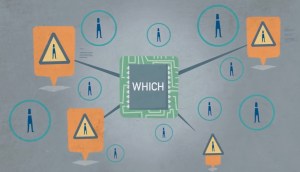
Even more amazing is that the WHO is actively promoting vaccination in the lovely video below, published in September 2015 [*]. In plain language, the video by the European office of the WHO announces that a compulsory vaccination is coming (‘objective 2’) and that every citizen must receive a jab, because we can trust Big Pharma on their blue eyes.

The video warns that all unvaccinated people will be tracked through digital means and will be persuaded to vaccinate, on the left the illustration shown.
In any case, it is very up to date, this promo video.


[*] Of course this is grist to the mill of conspiracy theorists.

Geplaatst in English - posts in English on this blog, Europa, Grondrechten | Tags: , , | Plaats een reactie

European fundamental rights pretensions and sour reality

Europe has great pretensions when it comes to fundamental rights, but unfortunately the reality is different. This can be seen in the European approach (especially Commission and Council) to the USA’s abusive practices in the area of Citizenship-Based Taxation and FATCA (introduction, articles).

Official bodies regularly speak out about European negligence. Previously I wrote about EU Fundamental Rights Agency (FRA)’s major criticism [1].

Read also EDRi’s article UN Special Rapporteurs challenge EU’s counter-terrorism plans [2], e.g.:

Their statement does not judge the EU’s counter-terrorism plans kindly. While the Special Rapporteurs note that the scope of the new measures are “extensive in scope”, they point out the lack of crucial safeguards to guarantee human rights compliance in practice and the lack of monitoring and evaluation measures to understand and minimise the negative impacts on rights and freedoms.

Through their communication, the Special Rapporteurs demonstrate how several existing and foreseen EU security measures fail to meet the principles of legality, necessity and proportionality, enshrined in European and international laws (such as the Regulation on preventing the dissemination of Terrorism Content Online and the processing by Europol of sensitive data for profiling purposes). The fatal flaw lies in the use of broad and undefined terms to justify extensive interferences in human rights.

The Special Rapporteurs rightly question the specificity and meaning of “European values” and “European way of life”, both terms used as yardsticks for censoring online content and profiling travelers and migrants. For example, the statement criticises how Europol would be allowed to exchange personal data, including content hashes, IP addresses and URLs with private parties in order to detect and prevent the dissemination of “terrorist” and “extremist” material or “symbols” online and the creation of “terrorist accounts” on social media. Because the definitions of these terms are either absent or unclear and vague, the risk of overly censoring legitimate content is quite high. The statement emphasises that the risks of abusive and incorrect removals will become even greater with the use of Artificial Intelligence (AI) tools designed to automatically identify “terrorist content”. As a consequence and since social media facilitates the organisation of gatherings and collaboration, this censorship tools will likely curb the freedoms of association and peaceful assembly.

The problematic lack of concrete protective measures is also raised in the framework of Europol’s “large scale and indiscriminate collection and retention of data”, increased data sharing with private parties and “collection of broad categories of data such as racial or ethnic origin, political opinions, religious or philosophical beliefs or trade union membership”. The Special Rapporteurs note that these provisions in Europol’s reform would disproportionately impact the human rights of specific groups of people, and therefore contravene the right to non-discrimination. At the same time there are no specific safeguards to ensure that “they are not used to curb the rights of political opposition parties, trade unions and human rights defenders”.

Will the European Democracy, Rule of law and Fundamental rights Monitoring Group (DRFMG) act more serious tomorrow?

[1] Fundamental Rights Agency (FRA): ‘Counter terrorism but respect fundamental rights’, 27 November 2021.
[2] UN Special Rapporteurs challenge EU’s counter-terrorism plans, EDRi 1 December 2021.

Geplaatst in English - posts in English on this blog, Europa, Financieel recht, onder meer Wft, Wtt, Fraude, witwasbestrijding, Wwft, Grondrechten, Strafrecht | Tags: , , , | Plaats een reactie

Tomorrow: AML developments discussed in a working group of LIBE | European Parliament

Those interested in finding out what the future surveillance society in Europe will look like, should follow the developments regarding anti-money laundering (AML).
For them tomorrow there is an interesting event, organised by the Democracy, Rule of law and Fundamental rights Monitoring Group (DRFMG) set up by the Civil Liberties Committee (LIBE) of the European Parliament.

According to the press release DRFMG wil host:

  • Kristel SIITAM-NYIRI, European Prosecutor, EPPO
  • Floriana SIPALA, Head of Unit “Organised Crime, Drugs and Corruption”, Directorate-General for Migration and Home Affaires, European Commission
  • Igor NEBYVAEV, Executive Secretary of Moneyval, Council of Europe
  • Carolin GARDNER, acting Head of the Anti Money Laundering Unit, Innovation, Conduct and Consumers Department, European Banking Authority
  • Roland PAPP, Senior Policy Officer – Illicit Financial Flows, Transparency International

In exchange with these ‘experts’ DRFMG intends to take stock of developments in the fight against money laundering, corruption and organised crime. The meeting can be followed live here and takes place 2 December from 10:00 to 11:45.

The missing experts
It is notable that there is no expert on behalf of the victims of the anti-money laundering legislation, for example a representative of the Accidental Americans, who due to FATCA and European AML-legislation can no longer hold a bank account with a European bank when they have not obtained an American tax identification number (more on FATCA here). Or and expert from the nonprofit organisations that are refused by banks.

The dark shadows of AML
Hopefully DRFMG will pay attention to the dark shadows cast by anti-money laundering legislation, as are currently becoming more and more visible in the Netherlands and other EU-countries, like:

  • the discriminatory practices of banks that are refusing basic bank services to people, companies and organisations (‘de-risking‘), and
  • the enormous and ineffective bureaucracy caused by AML / CFT legislation, whereby huge amounts of personal and other confidential data are collected and disseminated, without proper supervision of necessity and (cyber)security.

The fight against money laundering, corruption and organised crime should comply with fundamental legal principles, DRFMG should be aware of that.

We’ll see if the session of tomorrow contains more than the usual AML/CFT marketing.

Geplaatst in English - posts in English on this blog, Europa, Financieel recht, onder meer Wft, Wtt, Fraude, witwasbestrijding, Wwft, Grondrechten | Tags: , , , , , , | Plaats een reactie