AI worries of La Quadrature du Net | Hiatus Coalition

The French NGO La Quadrature du Net is very worried about the use of artificial intelligence in modern society.


Some of the AI-articles of La Quadrature du Net:

14 February 2025 – AI Action Summit: Accelerating, whatever the cost:

The Paris summit on artificial intelligence (AI) organized by France was held on February 10 and 11, 2025. It will go down in history as a great moment of acceleration. While French civil society is organizing, particularly through the coalition Hiatus launched on the initiative of La Quadrature du Net, to resist the surge of artificial intelligence, Europe is engaging in a headlong rush which, in the current context, could precipitate us towards a kind of techno-fascism.

7 February 2025 – Launch of the Hiatus Coalition, to Resist AI and its World:

This text is the founding manifesto of “Hiatus”, a coalition of a diverse range of French civil society organizations that intend to resist the massive and widespread deployment of artificial intelligence (AI). (…)
The massive deployment of artificial intelligence has become a political priority. Extending the rhetoric that has accompanied computerization for over half a century, promises abound to confer revolutionary virtues on AI and impose the idea that, provided certain risks are taken into account, it would necessarily be a vector of progress. The whole society is called upon to adapt to this new industrial and technocratic buzzword. Everywhere in public administrations, AI is set to proliferate, at the cost of an increased technological dependency. Everywhere in the private sector, managers are calling for AI to “optimize” work. Everywhere in our homes, in the name of convenience and a senseless race for productivity, we are pushed to adopt it.

31 January 2025 – Justice finally finds Briefcam unlawful:

Yesterday, we achieved a great victory before the Grenoble administrative court! In La Quadrature du Net vs the city of Moirans, Isère, we obtained a decision recognizing the illegality of Briefcam’s algorithmic video surveillance software. The court ordered the town to immediately stop using the software.

4 December 2024 – It’s not AI, it’s state-of-the-art exploitation:

La Quadrature du Net is now tackling a new front: the fight against the onslaught of artificial intelligence (AI) in all areas of society.

Geplaatst in English - posts in English on this blog, Europa, Financieel recht, onder meer Wft, Wtt, Fraude, witwasbestrijding, Wwft, Grondrechten, ICT, privacy, e-commerce | Tags: , | Plaats een reactie

Advies procureur-generaal over identificatie

Op 21 februari jl. bracht de procureur-generaal (PG) bij de Hoge Raad advies uit inzake een geschil op het gebied van het cliëntenonderzoek in de witwasbestrijding. Het betreft cassatie van de uitspraak van Hof Amsterdam van 5 maart 2024, ECLI:NL:GHAMS:2024:419. Onder meer gaat het over verificatie van de identiteit door de financiële instelling (ICS) die dat cliëntenonderzoek uitvoert.

Identificatie is een van de meest riskante activiteiten die iedere burger uitvoert en was aanleiding voor Privacy First om een verzoek aan de minister van Financiën en DNB te doen.

In de door de PG besproken zaak gaat het volgens zijn beschrijving om het navolgende (1.4):

Het middel betoogt in de eerste plaats dat het door ICS toegepaste (her)identificatieproces de verwerking van biometrische gegevens behelst, wat in beginsel verboden is op grond van artikel 9 van de Algemene verordening gegevensbescherming (hierna: AVG).2 Het middel betoogt in de tweede plaats dat artikel 33 van de Wwft aan financiële ondernemingen geen wettelijke grondslag biedt voor het bewaren van een kopie van een identiteitsbewijs met pasfoto. ICS bestrijdt deze beide stellingen. Zij meent verder dat [eiser] geen belang heeft bij haar klachten.

2 Verordening (EU) 2016/679 van het Europees Parlement en de Raad van 27 april 2016 betreffende de bescherming van natuurlijke personen in verband met verwerking van persoonsgegevens en betreffende het vrije verkeer van die gegevens en tot intrekking van Richtlijn 95/46/EG (algemene verordening gegevensbescherming) (PbEU 2016, L 119).

De PG adviseert het cassatieberoep te verwerpen.

Jammer genoeg gaat het advies alleen over de vraag of een witwasbestrijdingsplichtige een kopie van het identiteitsbewijs mag of moet maken en niet over de grote risico’s die aan deze praktijk is verbonden, nu witwasbestrijdingsplichtigen alle kopieën denken te moeten bewaren tot vijf jaar na het einde van de relatie, wat bij langdurige relaties grote cybersecurity risico’s oplevert. Die risico’s nemen verder toe als er grote hoeveelheden biometrische gegevens worden geregistreerd en langdurig bewaard. (Dat zal met de voorafgaande procedure en de cassatiemiddelen te maken hebben.)

De PG is van mening dat hier geen sprake is van verboden verwerking van biometrische gegevens. Ook als hij gelijk zou hebben laat dit onverlet dat ook in de witwasbestrijding aan dataminimalisatie moet worden gedaan.

Als de PG gelijk heeft, is het hoog tijd dat er wetgevende maatregelen komen om het excessief verzamelen van identiteitsbewijzen en biometrische gegevens door witwasbestrijdingsplichtigen in te perken.

Geplaatst in Financieel recht, onder meer Wft, Wtt, Fraude, witwasbestrijding, Wwft, Grondrechten, ICT, privacy, e-commerce | Tags: , , , , , , , , | Plaats een reactie

Nationale Bank van België aan de slag met workplace surveillance?

De Nationale Bank van België (NBB) maakte bekend dat ‘Behaviour & Culture’ essentiële aspecten worden van de governance van banken. Opvallend is dat NBB melding maakt van de volgende opties, ook als ‘tools’ aangeduid:

  • Opzetten van een interne database, als een vorm van interne jurisprudentie, waarin alle vastgestelde problemen op het gebied van ‘Behaviour & Culture’ (dominante CEO, slecht functionerende bestuursorganen, ondoorzichtige organisatiestructuren, enz.) worden opgenomen.
  • Voorzien in de mogelijkheid voor de NBB om vergaderingen van bestuursorganen van banken als waarnemer bij te wonen.
  • Ontwikkelen van een AI-tool om de notulen van bestuursorganen van banken te analyseren en brede trends op het gebied van ‘Behaviour & Culture’ te identificeren.
  • Herzien van inspectieprogramma’s gericht op governance om aspecten die verband houden met ‘Behaviour & Culture’ beter te integreren.
  • Rekening houden met gedragsgerelateerde aspecten bij de ‘fit & proper’-controles van managers, niet alleen wanneer ze in functie treden maar ook doorlopend gedurende hun ambtstermijn.

Workplace surveillance
Het lijkt er op dat hier sprake is van workplace surveillance, een onderwerp waarmee diverse financiële toezichthouders bezig zijn, al wordt dat niet openlijk geuit.

Lees mijn artikel over digitale personentoetsing bij de Europese bankentoezichthouder ECB (Heimdall tool). Overigens kwam ECB in het nieuws vanwege een slecht werkklimaat.

Het zou mooi zijn als de financiële toezichthouders eerlijk zouden vertellen dat zij denken dat de governance van hun eigen organisaties en van de financiële instellingen is gediend met permanente monitoring van medewerkers. Dan kan ook de vraag worden gesteld waar die veronderstelling op is gebaseerd en of onafhankelijke toetsing heeft plaats gevonden.

Geplaatst in Financieel recht, onder meer Wft, Wtt, Fraude, witwasbestrijding, Wwft, ICT, privacy, e-commerce | Tags: , , , | Plaats een reactie

Dutch chapter of the Liberties Rule of Law Report 2025 ignores the downsides of AML/CFT law

Civil Liberties Union for Europe published the Rule of Law Report 2025: the announcement, the report. The report was compiled by 43 rights groups from 21 EU countries and found that the rule of law issues and democratic decline documented in the past years persisted.

The part of the report on the Netherlands often reflects the political desires of the rapporteurs, e.g. regarding the definition of corruption.

Blind eye of the NL-rapporteurs
Interestingly, the rapporteurs turn a blind eye to the large-scale discriminatory effects of anti-FEC regulations [*] and the increasing pointless bureaucracy caused by the rules.
These rapporteurs in some paragraphs undermine rule of law principles, e.g. by proposing that companies must prove their innocence if there are suspicions of crime (page 754 first column).
This reversal of the burden of proof is part of a general regulatory trend, for example in the field of anti-money laundering and terrorist financing, which is already causing great harm to citizens. Also interesting are examples of ‘good’ regulation from countries with poor rule of law, such as the US, UK and France.


[*] Anti-money laundering (AML), countering financing of terrorism (CFT) and sanctions legislation (it includes anti-corruption). Examples: 1, 2.


Geplaatst in English - posts in English on this blog, Europa, Grondrechten, Not-for-profit, Sanctieregels, Ubo-register | Tags: , , , , , , , , , , , | Plaats een reactie

Prangende vragen leden Eerste Kamer over het wetsvoorstel bestuurlijk verbod ondermijnende organisaties

De Tweede Kamer heeft het voorstel voor de Wet bestuurlijk verbod ondermijnende organisaties aangenomen. Het voorstel staat op de agenda van de plenaire vergadering van de Eerste Kamer van 22 april a.s.
Leden van de commissie Justitie en Veiligheid van de Eerste Kamer hebben op 25 februari enige prangende vragen over dit wetsvoorstel gesteld. Zo wordt gevraagd of door middel van deze wet tegen demonstraties kan worden opgetreden en of burgerlijke ongehoorzaamheid onder de reikwijdte kan vallen, zodat burgerlijk ongehoorzame organisaties verboden kunnen worden.

Meer informatie over het wetsvoorstel is te vinden in het dossier van de Eerste Kamer.

Geplaatst in Grondrechten, Not-for-profit, Rechtspersonenrecht, Strafrecht | Tags: , , , | Plaats een reactie

Denmark violates fundamental rights | Ćapeta opinion

Recently the opinion of Advocate General Ćapeta (Case C‑417/23, ECLI:EU:C:2025:98) for the European Court of Justice was published. The conclusion of Ćapeta was:

172. In the light of the foregoing, I propose that the Court of Justice answer the questions referred by the Østre Landsret (High Court of Eastern Denmark) as follows:

(1) The term ‘ethnic origin’ in Articles 1 and 2 of Council Directive 2000/43/EC of 29 June 2000 implementing the principle of equal treatment between persons irrespective of racial or ethnic origin must be interpreted as covering a group of persons defined as ‘immigrants and their descendants from non-Western countries’.
(2) The scheme that uses concepts such as ‘immigrants and their descendants from non-Western countries’ for the categorisation of a neighbourhood in which a number of public housing units is to be reduced must be interpreted as direct discrimination within the meaning of Article 2(2)(a) of Directive 2000/43.

Steininger published the article They Not Like Us. Why the Danish ‘Ghetto Law’ violates EU law on Verfassungsblog, explaining the opinion and Danish ghetto law.

Geplaatst in English - posts in English on this blog, Europa, Grondrechten | Tags: , , , | Plaats een reactie

Donatiewetsvoorstel in de media | RD, Trouw

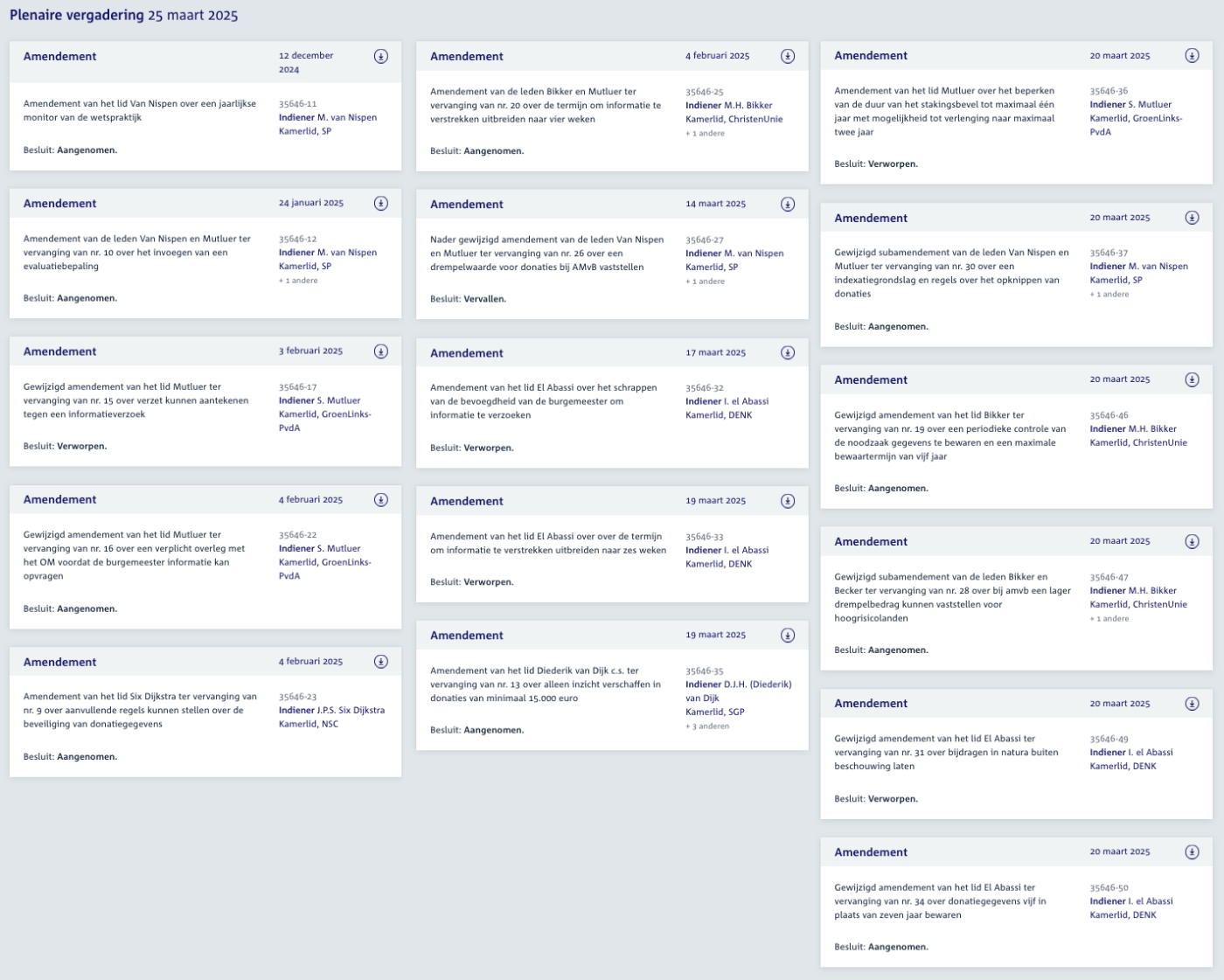
Gisteren is gestemd over amendementen op het wetsvoorstel Wet transparantie en tegengaan ondermijning door maatschappelijke organisaties (Wtmo).

In de media vóór de stemmingen
Voorafgaand aan de stemmingen van gisteren verscheen in Trouw een opinie van hoogleraar Theo Schuyt, die de Tweede Kamer in zijn artikel ‘Controle op goede doelen gaat te ver‘ opriep niet in te stemmen met de wet die het maatschappelijk middenveld enkel schaadt, door “overheidscontrole mogelijk [te] maken op donaties, inclusief vrijwilligerswerk“.
Op 20 maart publiceerde EW het artikel Wtmo: 50 eurocent voor het KWF? Misschien bent u wel geradicaliseerd.

In de media na de stemmingen
Direct na de stemmingen verscheen een artikel van het RD, waarin wordt verondersteld dat het voorstel nu wel door de Tweede Kamer kan worden aangenomen. Wel meldt de krant dat Goede Doelen Nederland nog steeds fundamentele bezwaren heeft,

Die bevoegdheid kan volgens de organisatie willekeurig worden ingezet. „Wij blijven van mening dat dit wetsvoorstel opnieuw getoetst moet worden door de Afdeling advisering van de Raad van State”, aldus een woordvoerder.


Informatie over het wetsvoorstel is op deze site te vinden, tag Wet transparantie maatschappelijke organisaties, en op mijn quodari pagina over de Wtmo.

Geplaatst in Financieel recht, onder meer Wft, Wtt, Fraude, witwasbestrijding, Wwft, Grondrechten, Not-for-profit | Tags: , , , , | Plaats een reactie

Amendementen op voorstel Wtmo aangenomen door de Tweede Kamer

Vandaag is in de Tweede Kamer gestemd over de amendementen die waren voorgesteld voor het wetsvoorstel Wet transparantie en tegengaan ondermijning door maatschappelijke organisaties (Wtmo). Op deze pagina zijn de stemmingsuitslagen te vinden.


Informatie over het wetsvoorstel is op deze site te vinden, tag Wet transparantie maatschappelijke organisaties, en op mijn quodari pagina over de Wtmo.

Geplaatst in Financieel recht, onder meer Wft, Wtt, Fraude, witwasbestrijding, Wwft, Grondrechten, Not-for-profit | Tags: , , , | Plaats een reactie

Plixavra Vogiatzoglou on the European surveillance society in the making

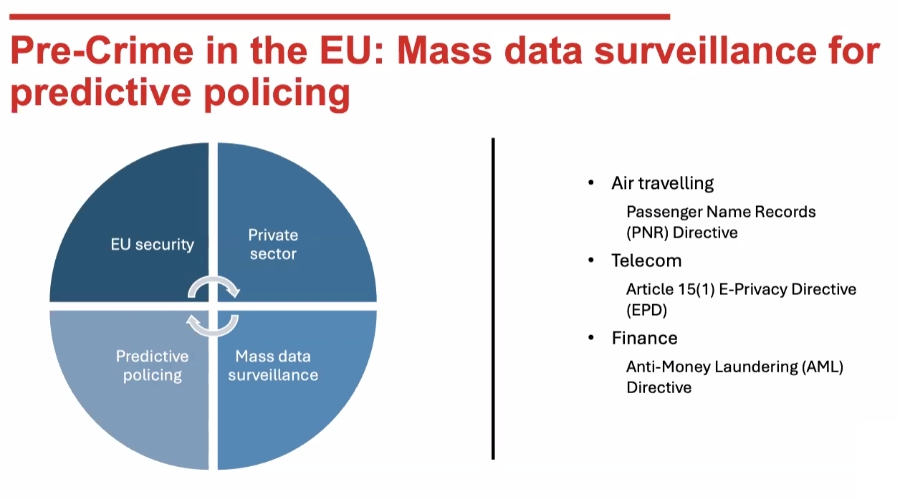
Today Plixavra Vogiatzoglou spoke at UCL about her book Mass Data Surveillance and Predictive Policing (a video to be expected). I watched the session online and saw how she summarised the contents of her book.

The subject of her book is pre-crime in the EU:

EU set up mass surveillance system:

That system involving large-scale processing with personal data is risky for citizens and society:

There are major legal gaps, not only in the legislation but also in the case law of Europe’s highest courts:

Her recommendations are:

If you want to know more, read the book or watch the video of the UCL event. When the url of the video is available I will add it to this article.

Geplaatst in English - posts in English on this blog, Europa, Financieel recht, onder meer Wft, Wtt, Fraude, witwasbestrijding, Wwft, Grondrechten, ICT, privacy, e-commerce, Verwijzingsportaal Bankgegevens | Tags: , , , , , , , , , , , , | Plaats een reactie

The UK Online Safety Act causes closure of legitimate small websites

According to the Open Rights Group the UK ‘Online Safety Act’ (OSA) harms freedom of speech in the UK. Read their article Save our Sites: Deadline 17 March, that starts with:

Incredible as it may seem, thanks to the Online Safety Act, dozens of harmless, safe, small websites are closing down by 17 March, rather than face threats of fines that could lose their operators their homes. Other websites, based outside of the UK, are likely to stop UK users from accessing their services, to avoid liability, through “geo-blocking”. (…)

This is the inevitable result of dragging literally any website, including (probably by mistake) personal blogs with comments, into the Online Safety regime.

The explainer by the UK government shows the broad scope (marking by me):

The Act’s duties apply to search services and services that allow users to post content online or to interact with each other. This includes a range of websites, apps and other services, including social media services, consumer file cloud storage and sharing sites, video-sharing platforms, online forums, dating services, and online instant messaging services.

The Act applies to services even if the companies providing them are outside the UK should they have links to the UK. This includes if the service has a significant number of UK users, if the UK is a target market, or it is capable of being accessed by UK users and there is a material risk of significant harm to such users.

As the British are often the first with unwise and fundamental rights violating regulations, European vigilance is needed


Information on OSA


Addition 24 January 2026
Security.nl: Brits Hogerhuis stemt voor verbod op vpn’s en social media voor jongeren.
Netzpolitik: Kommunikationsplattformen müssen Inhalte scannen, “Am Donnerstag ist ein Gesetz in Kraft getreten, laut dem Anbieter von Social-Media- und Dating-Diensten untersuchen müssen, was britische Nutzer*innen einander zuschicken. So sollen Menschen vor ungewollten Dickpics geschützt werden“.

Addition 24 February 2026
Security.nl: VK geeft bedrijf boete van 1,6 miljoen euro voor het niet toepassen van leeftijdsverificatie.
Ofcom is the British regulator for the communications services. It wrote: Ofcom fines porn company £1.35m for not having age checks.
Open Rights Group: Online harms: Millions could be forced to use unregulated age verification, introduction:

Big Tech Programme Manager James Baker said:
“The Government is playing whack-a-mole with online safety, focusing on individual harms and product features instead of confronting the structural power of dominant tech companies. By abandoning comprehensive AI regulation under pressure from Big Tech, it is allowing private actors to shape the rules of digital life without democratic oversight.
“It has also failed to regulate the age assurance industry even as it pushes plans that will force millions of people to hand over their biometrics or personal documents in order to access everyday online content.”

Geplaatst in English - posts in English on this blog, Grondrechten, ICT, privacy, e-commerce | Tags: , , , , , , , , , , | Plaats een reactie