Boete voor datagraaiende Microsoft dochter LinkedIn

De Ierse privacy toezichthouder heeft aan Microsoft dochter LinkedIn een boete opgelegd wegens datagraai praktijken, lees security.nl en het bericht van de toezichthouder. Het laat zien dat het machtige techbedrijf Microsoft niet integer is.


Lees de berichten over Microsoft op deze site.

Geplaatst in ICT, privacy, e-commerce | Tags: , , , , | Plaats een reactie

The impact of digital technologies on well-being

On the site of the OECD a paper (pdf) was announced in The impact of digital technologies on well-being, giving the following abstract:

Digital technologies are reshaping our lives, with significant impacts on personal and societal well-being. As these technologies are increasingly integrated into everyday life, it is crucial to raise awareness on their positive and negative impacts which are reviewed in this paper. While innovations like AI in healthcare and assistive devices empower individuals and improve access, they also introduce risks such as mental health challenges, misinformation, and privacy breaches. Raising awareness around digital risks helps individuals make smarter, safer decisions. At the same time, empowerment is about more than just awareness; it involves giving users control over their digital experiences, equipping them with the skills to harness technology for education, employment, and personal growth. Ultimately, responsible digital use is essential for safeguarding data privacy, supporting democratic values and respecting ethical standards. While digital technologies have the power to level the playing field, they can deepen existing inequalities if access and skills are unevenly distributed. Bridging digital divides through tailored inclusive solutions is equally important. Understanding the relationship between technology use and well-being is therefore key, but further research is needed to fully grasp these dynamics.


Read the articles on this site on unhealthy IT.


Addition 27 June, 2025
Published on JAMA: Addictive Screen Use Trajectories and Suicidal Behaviors, Suicidal Ideation, and Mental Health in US Youths. Findings:

In this cohort study of 4285 US adolescents, 31.3% had increasing addictive use trajectories for social media and 24.6% for mobile phones over 4 years. High or increasing addictive use trajectories were associated with elevated risks of suicidal behaviors or ideation compared with low addictive use. Youths with high-peaking or increasing social media use or high video game use had more internalizing or externalizing symptoms.

Geplaatst in English - posts in English on this blog, ICT, privacy, e-commerce | Tags: , , , , , , , , | Plaats een reactie

EDPB consultation on processing of personal data based on ‘legitimate interest’ (gerechtvaardigd belang)

The public consultation [1] of the European Data Protection Board (EDPB) on processing of personal data based on ‘legitimate interest’ [2] will end on Wednesday 20 November. It is an important consultation in light of the tennis association ruling by the Court of Justice of the European Union [3] and the misuse by ad companies and other data traders of legitimate interest as a legal base for processing of personal data under the GDPR.

Contrary to what some may think, the CJEU-ruling does not open the door to sports associations and other organisations selling personal data without the consent of data subjects.


Notes:

[1] Consultation page EDPB with documents.
[2] Article 6(1)(f) GDPR.
[3] Judgment of 4 October 2024, ECLI:EU:C:2024:857.

Geplaatst in English - posts in English on this blog, Europa, ICT, privacy, e-commerce | Tags: , , , , , , , | Plaats een reactie

The potential of tax microdata for tax policy

Governments are immensely excited about the technical possibilities available to track all citizens every second of every day. Sometimes surveillance is outsourced to ad companies such as Meta and Google. But governments themselves also have a good information position, for example through the access they have to the payment system.
One of the important reasons for governments to harvest financial personal data and other relevant data is taxation. There is also interest in microdata in that domain, according to a 2019 publication [*] on the OECD website.

Read the announcement The potential of tax microdata for tax policy and the full paper (pdf). The announcement:

This paper explores one distinctive form of the ‘big data’ of economics – individual tax record microdata – and its potential for tax policy analysis. The paper draws on OECD collaborations with Slovenia and Ireland in 2018 where tax microdata was used.
Most empirical economics is based on survey data. However, the current trend of low and falling response rates has placed a question mark over the future value of survey practice generally. By contrast, this paper discusses the increasing use of tax microdata in economic research and the new types of policy analysis made possible by it.
In the future, best-practice tax policy analysis is likely to combine tax microdata with survey and national account data. The advantages of these combined data will be important for policymakers to understand and address future policy challenges including protecting tax revenues in an era of population ageing and supporting fairness given the changing nature of economic mobility.

It shows that there are a thousand and one reasons to collect and analyze personal data from every citizen. Still, it is a pity that no one has an overview of all these national and international government activities and that high-quality oversight is lacking.


[*] Kennedy, S. (2019), “The potential of tax microdata for tax policy”, OECD Taxation Working Papers, No. 45, OECD Publishing, Paris, https://doi.org/10.1787/d2283b8e-en.

Geplaatst in Belastingrecht, English - posts in English on this blog, Europa, Financieel recht, onder meer Wft, Wtt, Fraude, witwasbestrijding, Wwft, Grondrechten, ICT, privacy, e-commerce | Tags: , , , , , | Plaats een reactie

Facebook datalekken bij de Duitse rechter

In Duitsland wordt geprobeerd de Facebook datalekken aan te pakken, lees dit Duitstalige artikel door Netzpolitik, waarin wordt gemeld dat de vele datalekken bij dit advertentiebedrijf hebben geleid tot diverse procedures. Dat is niet gemakkelijk met zo’n machtige en rijke tegenstander.

Geplaatst in ICT, privacy, e-commerce | Tags: , , , | Plaats een reactie

EDPB criticises ‘Going Dark’ proposals | digital communication secrecy principle

The European Data Protection Board (EDPB) on 4 November published a statement [*] on recommendations by a European High-Level Group that undermine the digital communications secrecy principle.

EDPB summarizes the statement as follows:

The statement on the recommendations of the HLG on access to data for effective law enforcement underlines that fundamental rights must be safeguarded when law enforcement agencies access the personal data of individuals. While the EDPB supports the aim of effective law enforcement, it points out that some of the HLG’s recommendations could cause serious intrusiveness vis-à-vis fundamental rights, in particular the respect for privacy and family life.

While the EDPB positively notes the recommendation may lead to the establishment of a level-playing field on data retention, it considers that a broad and general obligation to retain data in electronic form by all service providers would create a significant interference with the rights of individuals. Therefore, the EDPB questions whether this would meet the requirements of necessity and proportionality of the Charter of Fundamental Rights of the EU and the CJEU jurisprudence.

In its statement, the EDPB also emphasizes that the recommendations concerning encryption should not prevent its use or weaken the effectivity of the protection it provides. For example, the introduction of a client-side process allowing remote access to data before it is encrypted and sent on a communication channel, or after it is decrypted at the recipient, would in practice weaken encryption. Preserving the protection and effectivity of encryption is important to avoid that the respect for private life and confidentiality is negatively impacted and to ensure that the freedom of expression and economic growth, which depend on trustworthy technologies, are safeguarded.


More information:


More on this website on Going Dark and on chatcontrol.


Addition 26 November 2024
Eucrim publications on encryption:
# New Report on Encryption by EU Innovation Hub, 9 August 2024;
# Law Enforcement Experts: Action against End-to-End Encryption Needed, 31 July 2024.

From the August 2024 article:

According to the report, a framework to access encrypted communications is steadily taking shape in the EU. Although the newly adopted e-evidence package s a step in the right direction, namely towards enhancing law enforcement access to electronic evidence, many questions remain concerning the admissibility of evidence gathered from encrypted communication channels and the challenges arising from various technologies. (…) The report draws the following conclusions: (…)
* A wider debate on the introduction/use of alternative means of bypassing encryption (e.g. client-side scanning) is necessary. (…)
* Interception technologies for user identification should be a legal requirement for the next generation of mobile networks (5G and 6G).

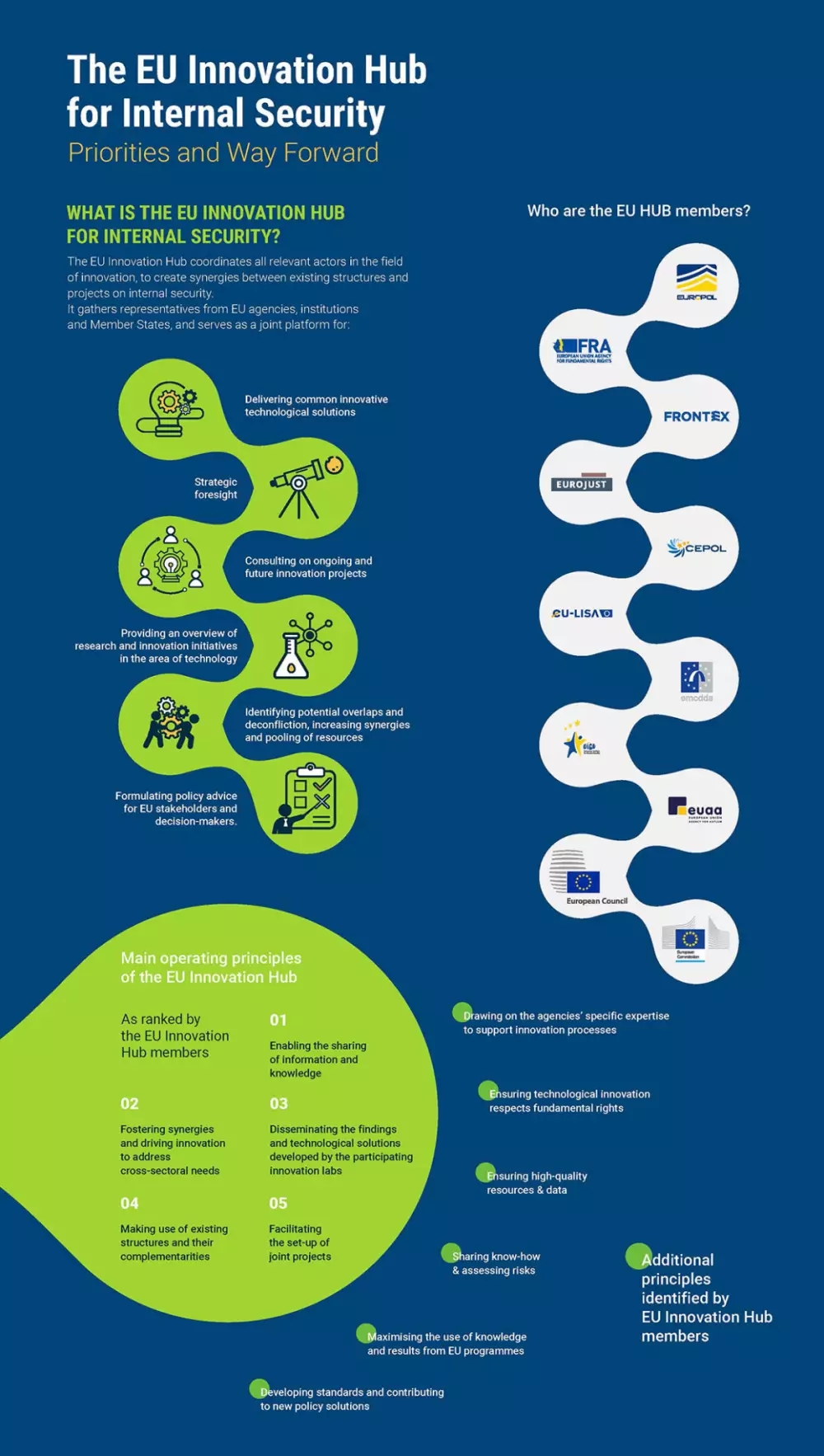
The report mentioned was produced by ‘The EU Innovation Hub voor Internal Security’, consisting of Europol, Eurojust, DG HOME, JRC, the European Council’s Counter-Terrorism Coordinator and eu-LISA.


Illustration on the Europol site, page 1:

Geplaatst in English - posts in English on this blog, Financieel recht, onder meer Wft, Wtt, Fraude, witwasbestrijding, Wwft, Grondrechten, ICT, privacy, e-commerce | Tags: , , , , , , , , , , , , , , | Plaats een reactie

Het niet-transparante microdata pleidooi van een AFM-bestuurder | financiële privacy

Bestuurder van de Autoriteit Financiële Markten (AFM) Jos Heuvelman werd door het FD in de gelegenheid gesteld om de microdata-behoefte van de AFM te promoten.
Lees Voor modern financieel toezicht zijn data onontbeerlijk (betaalmuur).

Opvallend is dat Heuvelman niet transparant is over het feit dat de AFM en andere financiële toezichthouders al op grote schaal financiële persoonsgegevens (‘microdata’, ‘granulaire gegevens’) verwerken.

Grondrechtenafweging nodig
Privacy First heeft aan de overheidsbehoefte aan financiële persoonsgegevens aandacht besteed in de bijdrage aan een wetgevingsconsultatie in juli van dit jaar [*]. De organisatie schrijft in de aankondiging van de consultatiedeelname onder meer:

Toezichthouders zoeken naar data voor ‘machine learning’
Privacy First heeft geconstateerd dat internationale financiële samenwerkingsverbanden zoals de Bank for International Settlements (BIS) bepleiten dat financiële toezichthouders gebruikmaken van kunstmatige intelligentie (artificial intelligence, AI). Die kunstmatige intelligentie moet door middel van persoonsgegevens en andere gedetailleerde gegevens van personen en organisaties (‘granulaire data’) getraind worden. Gevolg van deze veronderstelling is dat de toezichthouders proberen aan zoveel mogelijk granulaire data te komen, waartoe de financiële persoonsgegevens van iedere burger behoren.
Privacy First vindt dat ongewenst en wijst op het advies van de Raad voor het Openbaar Bestuur (ROB) van mei 2021, bekendgemaakt via het nieuwsbericht ‘Politiek moet in actie komen om burgers te beschermen tegen uitdijende datahonger‘. De ROB bepleit een volwassen afweging van de noodzaak om persoonsgegevens aan de overheid te verschaffen, een afweging die in de voorstellen van het ministerie van Financiën ontbreekt.

Grootschalige verwerking van persoonsgegevens door AFM en DNB vindt al plaats
Daar komt nog bij dat zowel AFM als DNB al op grote schaal granulaire data verwerken. Voorbeeld zijn de persoonsgegevens die AFM verwerkt op grond van Mifid 2: weinig beleggers zijn ervan op de hoogte dat de AFM bij iedere aandelenkoop of -verkoop paspoortnummers en/of fiscale nummers en geboortedata van de betrokken belegger ontvangt. Verder ontvangt AFM van pensioenfondsen op grote schaal persoonsgegevens van burgers. DNB ontvangt persoonsgegevens bij uitvoering van het depositogarantiestelsel, onder meer adressen en telefoonnummers, en verwerkt op grote schaal persoonsgegevens in het kader van het witwasbestrijdingstoezicht. Beide toezichthouders ontvangen op grote schaal persoonsgegevens van het Centraal Bureau voor de Statistiek (CBS).

Verantwoording en grondrechtentoetsing gewenst
Privacy First stelt voor dat eerst verantwoording wordt afgelegd van de huidige verwerking van granulaire gegevens door DNB en AFM en dat vervolgens door middel van een adequate grondrechtentoetsing wordt vastgesteld of er wel redenen zijn om financiële instellingen te verplichten extra gegevens te leveren.


Privacy First pleit voor transparantie over de verwerking van financiële persoonsgegevens en krachtig onafhankelijk toezicht.


[*] Aangekondigd in het artikel Geen carte blanche DNB en AFM voor massale dataverwerking. De complete consultatiebijdrage is hier (pdf) te vinden.

Geplaatst in Financieel recht, onder meer Wft, Wtt, Fraude, witwasbestrijding, Wwft, Grondrechten, ICT, privacy, e-commerce | Tags: , , , , , , , , , | Plaats een reactie

DNB wijst op digitale veiligheid – ook de identiteit van burgers moet veilig geverifieerd worden

De Nederlandsche Bank (DNB) publiceerde vandaag het bericht Digitale veiligheid topprioriteit in grimmig geopolitiek klimaat. Het sluit aan bij de eerdere berichtgeving door DNB dat het verstandig is contant geld in huis te hebben (blog).

Veilige verificatie identiteit
Het zou mooi zijn als DNB dan ook de belangen van burgers zou mee nemen, zoals het belang dat de identiteit op een zorgvuldige wijze door financiële instellingen wordt geverifieerd. Daar vroeg Privacy First onlangs om.


Aanvulling 20 november 2024
Aanverwant is het DNB-bericht ‘Europese samenwerking cruciaal om geopolitieke risico’s het hoofd te bieden’ dat verwijst naar het rapport ‘Weerbaar in een gure wereld’.

Geplaatst in Financieel recht, onder meer Wft, Wtt, Fraude, witwasbestrijding, Wwft, Grondrechten, ICT, privacy, e-commerce | Tags: , , , , , , , , | Plaats een reactie

De ongeloofwaardige Nederlandse mensenrechtenpretenties en het nieuwste rapport van de Nationale Ombudsman over terroristenlijsten

Nederland heeft internationaal grote pretenties op het gebied van mensenrechten, maar maakt dat in Nederland niet waar. Niet alleen doordat na het recente geweld tegen joden door bepaalde politici moslimhaat wordt aangewakkerd, maar ook doordat misdaadbestrijders op onzorgvuldige manier bepaalde mensen verdacht maken, ik schreef daar al over.
Lees over dat laatste het bericht van de Nationale Ombudsman: Te weinig aandacht voor mensenrechten burgers op terrorisme- en extremismelijst. De Ombudsman schreef een rapport over de terroristenlijsten die de overheid bijhoudt en waar onschuldige burgers op terecht komen, met akelige consequenties.

Het bericht van de Nationale Ombudsman:

Rechtsbescherming en onafhankelijk toezicht niet op orde
Te weinig aandacht voor mensenrechten burgers op terrorisme- en extremismelijst

Nieuwsbericht 12 november 2024

De overheid verwacht dat burgers blind vertrouwen op het veiligheidssysteem, maar stelt daar te weinig tegenover. Dit zegt Nationale ombudsman Reinier van Zutphen in zijn onderzoek naar Contraterrorisme, Extremisme en Radicalisering (CTER) registraties van burgers. Juist omdat overheidsorganisaties niet volledig transparant kunnen zijn vanwege de nationale veiligheid, moet toezicht en rechtsbescherming goed zijn georganiseerd. Dat is nu niet het geval.

Onder politieke druk begon de overheid in 2012 een lijst bij te houden van (mogelijke) uitreizigers naar jihadistisch strijdgebied. Sinds 2018 is er een landelijke aanpak. Hierbij registeren en monitoren de politie en de Koninklijke Marechaussee personen die mogelijk een dreiging voor de samenleving gaan vormen. Naast jihadisme wordt ook gekeken naar links- en rechtsextremisme. Hoewel er na 2018 de nodige verbeteringen zijn doorgevoerd, is de ombudsman kritisch over het huidige proces.

Black box
De ombudsman noemt het CTER-proces een ‘black box’. Burgers weten niet dát ze in beeld zijn en met welke instanties en landen informatie over hen wordt gedeeld. Hierdoor komt hun recht op privacy onder druk te staan. Mensen kunnen onverwachts in de problemen komen. Bijvoorbeeld als ze op vakantie het land van bestemming niet in mogen of in het buitenland vast komen te zitten. Hierdoor worden zij beperkt in hun recht op bewegingsvrijheid en in sommige gevallen kunnen zij hierdoor hun familie niet meer zien.

Burger: “Bij aankomst in Antalya werd de toegang van alleen mij geweigerd. Zij hebben mij een dag vastgehouden in een cel en zeiden dat er een ban op mijn naam staat die betrekking heeft op Interpol, waardoor zij mij het land niet in lieten gaan. De toegang tot Turkije is mij geweigerd zonder geldige reden.”

Rechtsbescherming niet op orde
Het onderzoek van de ombudsman laat zien dat het voor burgers vrijwel onmogelijk is om hun registratie aan te vechten. In reactie op hun inzageverzoek krijgen ze vaak te horen dat de gevraagde informatie niet gedeeld kan worden in verband met de nationale veiligheid. Of dat de informatie al verwijderd is. Procedures bij onafhankelijke organisaties zijn bij burgers onbekend en niet laagdrempelig. Het lukt burgers niet om een antwoord te krijgen op de vraag; wat is er nu eigenlijk gebeurd en mocht dat? Een slechte zaak, zegt Reinier van Zutphen. ‘Beslissingen van de overheid moeten navolgbaar, uitlegbaar en controleerbaar zijn.’

Individuele rechten onder druk
De burger kan er volgens de ombudsman niet blind op vertrouwen dat zijn individuele rechten en vrijheden voldoende zijn beschermd. CTER-registraties staan op gespannen voet met de individuele rechten en vrijheden van burgers. De ombudsman roept betrokken instanties op het proces op orde te brengen en het perspectief van de burger structureel mee te wegen bij de beslissingen die zij nemen.

Reinier van Zutphen: “Meer aandacht voor de rechten van de mens betekent niet automatisch minder aandacht voor de veiligheid. Alleen wanneer dit in balans is, kunnen burgers erop vertrouwen dat hun individuele rechten en vrijheden niet naar de achtergrond verdwijnen bij het beschermen van de nationale veiligheid.”

Onafhankelijk toezicht te mager
Onafhankelijk toezicht op het CTER-proces is volgens de ombudsman te mager georganiseerd. Een structurele blik van buiten ontbreekt. Het toezicht is nu vooral achteraf georganiseerd. Fouten worden pas zichtbaar nadat de gevolgen al hebben plaatsgevonden. De ombudsman roept de minister op om werk te maken van onafhankelijk en structureel toezicht. Dit toezicht zou net zo stevig moeten zijn als het toezicht op de inlichtingen- en veiligheidsdiensten. In beide gevallen gaat om het verwerken en zo nodig delen van zeer gevoelige informatie.

Oproep aan minister
De ombudsman roept de minister van Justitie en Veiligheid op om de genoemde tekortkomingen aan te pakken. Zodat toezicht en rechtsbescherming goed zijn georganiseerd en mensenrechten en nationale veiligheid met elkaar in balans zijn.


Bijlage
Rapport Blind vertrouwen (pdf, 13.31 MB)


David Davidson schreef over het rapport bij Follow the Money (betaalmuur).

Geplaatst in Financieel recht, onder meer Wft, Wtt, Fraude, witwasbestrijding, Wwft, Grondrechten, Sanctieregels | Tags: , , , , , , , , , , | Plaats een reactie