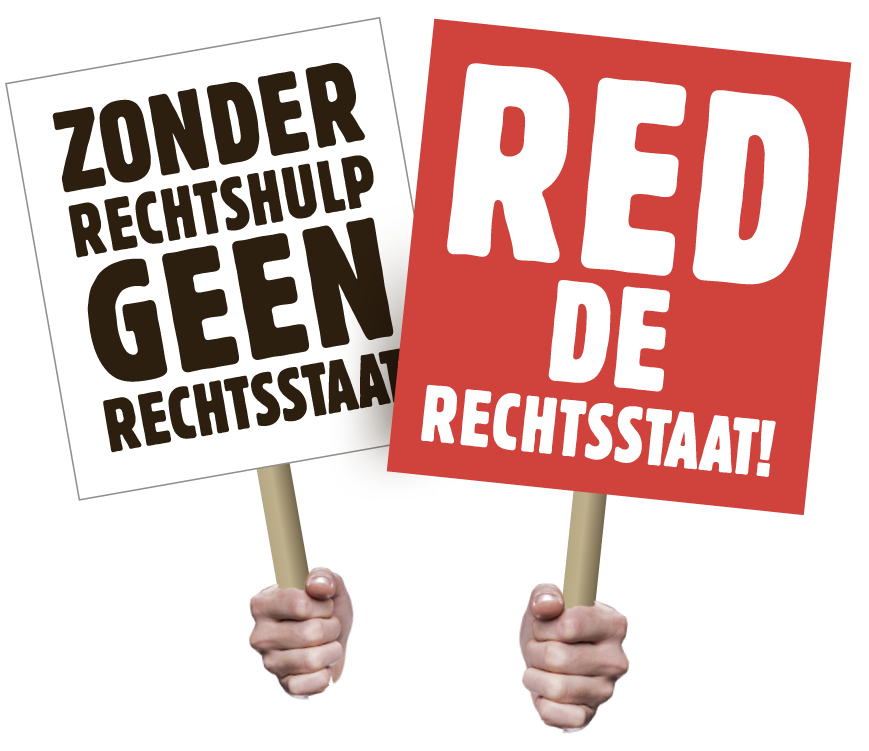
Raad van State waarschuwt dat Nederlandse democratie gevaar loopt | “Democratie is zoveel meer dan de helft plus één”

In het nieuwsbericht over het jaarverslag over 2024 waarschuwt de Raad van State:

Democratie is zoveel meer dan de helft plus één

Democratie is een krachtige en rechtvaardige organisatievorm van de samenleving. Zij waarborgt de essentiële vrijheid en betrokkenheid van burgers, doet recht aan de pluriformiteit van de bevolking en legitimeert overheidshandelen. Daarmee is democratie zoveel meer dan getalsmatige besluitvorming van de helft plus één, waarbij ‘de meerderheid het voor het zeggen heeft’. Het is van cruciaal belang om dit volledige verhaal van de democratie te blijven vertellen en uit te dragen wat de democratische normen en waarden zijn die overheid en burgers, en burgers onderling, met elkaar verbinden. Juist nu, in een tijd dat de democratie van diverse kanten onder druk staat. (…)

Krachtig en kwetsbaar

De kracht van de democratie is tegelijkertijd haar kwetsbaarheid. Door het open karakter van het democratisch bestel kan dat bestel van buitenaf worden ondermijnd of van binnenuit worden uitgehold. Dat laatste gebeurt als krachten binnen en buiten het politieke domein aan democratie een zeer beperkte betekenis geven, namelijk die van een organisatie van machtsvorming door de meerderheid. In een democratie gaat het om zoveel meer: bescherming van minderheden, respecteren van fundamentele rechten, open ruimte voor maatschappelijk en publiek debat. En respect voor de rechter die wetten en regels toepast die democratisch tot stand zijn gekomen en de overheid aan die wetten en regels houdt.

Democratisch ethos

Tegenover de simpele en gevaarlijke duiding van democratie als de ‘majority rules’ en tegenover autocratische tendensen die in veel democratieën op dit moment zichtbaar zijn, moeten krachtige waarborgen staan voor de integriteit van onze democratische rechtsstaat en een duidelijk merkbaar democratisch ethos. Democratisch ethos ondersteunt verstandige democratische besluitvorming, uitvoering en omgang met elkaar, ook als de regels en de instituties soms piepen en kraken. Een diepgeworteld democratisch ethos is het beste antwoord op de kwetsbaarheid van het democratisch bestel. Een weerbare democratie stelt grenzen aan ondermijning of uitholling en spitst wetgeving daarop toe, onder meer door regels voor organisatie en financiering van en toezicht op politieke partijen, waaronder het partijverbod.

Burgerschap

Voor democratie en rechtsstaat zijn instituties als rechtspraak, media en wetenschap van fundamentele waarde. Zij moeten daarom beschermd en versterkt worden in hun functies en vrijheid. Maar ook daadwerkelijke betrokkenheid en participatie vanuit alle lagen van de bevolking is nodig. Een volwaardige democratie kan niet zonder democratisch burgerschap. Om dat te bevorderen staat de ontwikkeling van het democratisch ethos voorop. Dat begint bij voorbeeld- en voorleefgedrag van politici en publieke ambtsdragers en burgerschapsvorming in het onderwijs kan dat sterk bevorderen. Uiteindelijk is het ieders verantwoordelijkheid om het zorgvuldige gesprek aan te gaan in de publieke ruimte.

‘Werk in uitvoering’

Een volwaardige democratie is voortdurend ‘werk in uitvoering’. Democratie is niet gebaat bij stilstand. Zij vergt steeds onderhoud. De Nederlandse democratie staat onder druk en wordt bedreigd. Dat is zorgelijk, maar moet vooral een aanmoediging zijn om de kracht van het bestel te versterken en de kwetsbaarheid te verminderen. De lange democratische traditie van Nederland geeft daarvoor het vertrouwen.

Meer informatie: Inleiding: Krachtig en kwetsbaar. De waarde van democratie, ook als pdf.

In het jaarverslag over 2024 komen ook andere onderwerpen aan de orde, onder meer uitgelichte adviezen en uitspraken, zoals Wet op de politieke partijen is breuk met huidige stelsel.
Verder is er een ‘legisprudentie’ overzicht (pdf) en een jurisprudentieoverzicht (pdf).

Geplaatst in Grondrechten | Tags: , | Plaats een reactie

ECB | Empowering Europe: boosting strategic autonomy through the digital euro and the vital role of cash

A member of the executive board of the European Central Bank (ECB), Mr. Piero Cipollone, is promoting the digital euro in his speech Empowering Europe: boosting strategic autonomy through the digital euro.

He also pays attention to cash:

The vital role of cash in ensuring financial inclusion and resilience
Despite the rapid digitalisation of retail payments, cash remains a cornerstone of the European financial system and is currently our only sovereign means of payment.
The continued strong demand for cash [4] highlights the importance of ensuring that it remains a convenient, secure and universally accepted means of payment and store of value.
Cash ensures financial inclusion, but it also plays a crucial role in maintaining the resilience of our payment systems and economies. In times of crisis, for example during cyberattacks or power failures, cash provides a reliable fall-back option. We have also seen this during the natural disasters that have affected parts of the euro area over the past year.
Against this background, the Eurosystem is fully committed to ensuring that cash remains a widely available and accepted means of payment for everyone in Europe. We have implemented a comprehensive cash strategy [5], and we are redesigning euro banknotes to make them fit for the future.
Moreover, the ECB strongly welcomes the proposed regulation governing the legal tender status of euro banknotes and coins. As we explained in our opinion, the regulation should clearly prohibit ex ante unilateral exclusions of cash by retailers or service providers. It should also ensure that Member States will hold the banking sector responsible for providing essential cash services to both private and corporate customers, ensuring good access to facilities for withdrawing and depositing euro cash across the euro area. [6]

[4] The total value of euro banknotes in circulation is currently just below €1.6 trillion. And banknotes circulate rapidly: in 2024 the value of banknotes supplied by banks to their customers was at a similar level, just above €1.6 trillion.
[5] The Eurosystem cash strategy aims to ensure that cash remains widely available and accepted as both a means of payment and a store of value. See also ECB (2025), “ECB selects motifs for future euro banknotes”, press release, 31 January.
[6] This approach ensures legal certainty for in-person payments and is aligned with the provisions laid down in the digital euro draft regulation. See Proposal for a Regulation of the European Parliament and of the Council on the legal tender of euro banknotes and coins, European Commission, COM(2023) 364 final, 28 June 2023 and Opinion of the European Central Bank of 13 October 2023 on a proposal for a regulation on the legal tender of euro banknotes and coins (CON/2023/31).

His conclusion is that is is time to act, making progress on both the digital euro regulation and the regulation on the legal tender status of cash.

Geplaatst in English - posts in English on this blog, Europa, Financieel recht, onder meer Wft, Wtt, Grondrechten, ICT, privacy, e-commerce | Tags: , , | Plaats een reactie

Sustainable finance and household microdata | EBF

Europe wants to monitor and analyse every citizen from day to day and maybe has justifiable reasons to do so (sometimes this is outsourced to companies). Yet the question is whether collecting all this detailed financial data, also called ‘microdata’ or ‘granular data’, is wise.

Household data in the Taxonomy Disclosures Delegated Act
An example of financial microdata can be found in a delegated act by the European Commission in the field of sustainable finance, the so-called Taxonomy Disclosures Delegated Act [1]. According to this act credit institutions, like banks, have to provide a ‘Green asset ratio for retail exposures‘ to the Commission [2]. The following types of microdata are mentioned:

  • the retail lending portfolio, in particular the mortgage lending portfolio;
  • residential real estate or house renovation loans;
  • credit consumption loans for car loans.

EBF: taxonomy data from retail clients are not available or cannot be documented
Recently the European Banking Federation (EBF) in response to a consultation on amendment of the Taxonomy Disclosures Delegated Act commented that it is not practically possible to provide the requested Green asset ratios (GARs) on households (‘retail clients’):

While no reporting is going to be required from and on midcaps, banks are still expected to collect EU Taxonomy data from retail clients (mortgage, car loans etc.), including on DNSH and MS which, in most instances are not available or cannot be documented by the retail customers.

EBF asks to remove retail exposures from the GARs.

More information:
read my articles on microdata for Europe, microdata & AFM and DNB and microdata in general.


Notes:

[1] Taxonomy Disclosures Delegated Act, Commission Delegated Regulation (EU) 2021/2178.
[2] See paragraph 1.2.1.3. of the delegated act. According to paragraph 1.2.1.6. of the delegated act there will be the following green asset ratios (GARs) based on household data:

(c) GAR for residential real estate exposures, including house renovation loans, for the objectives of climate change mitigation, climate change adaptation, and circular economy;
(d) GAR for retail car loans, for the objective of climate change mitigation;

Geplaatst in English - posts in English on this blog, Europa, Financieel recht, onder meer Wft, Wtt, Grondrechten, ICT, privacy, e-commerce | Tags: , , , , , | Plaats een reactie

FtM | Banken zetten hun klanten vliegensvlug op een zwarte lijst: ‘Ik werd een verbitterde klootzak’

In een lezenswaardig artikel van Nick de Jager, Banken zetten hun klanten vliegensvlug op een zwarte lijst: ‘Ik werd een verbitterde klootzak’ (betaalmuur), legt hij de zwarte lijsten-praktijken van banken worden uit. Intro:

Banken en verzekeraars gebruiken een ‘zwarte lijst’ om elkaar te waarschuwen voor fraudeurs. Sta je daar eenmaal op, dan kun je jarenlang nergens meer terecht voor een lening of hypotheek. En om van de lijst af te komen, moet je meestal naar de rechter. ‘Mensen die niets in de portemonnee hebben, kunnen het schudden.’ (…)

Volgens critici kunnen banken en verzekeraars hun klanten via die lijst ‘lichtvaardig criminaliseren’. Ze schrijven ongerijmde praktijken te gemakkelijk toe aan ‘fraude door cliënten’ in de hoop zelf boetes te ontlopen. ‘Misdaadbestrijding met een half oog op de eigen portemonnee,’ zegt een advocaat die vaak optreedt voor mensen die ten onrechte op de zwarte lijst zijn beland.


Lees de artikelen op deze site over zwarte lijsten van financiële instellingen.

Geplaatst in Financieel recht, onder meer Wft, Wtt, Fraude, witwasbestrijding, Wwft | Tags: , , | Plaats een reactie

Latombe case CJEU and the EU-US data transfer agreement

Euractiv published an article on the Latombe case at the Court of Justice of the European Union (CJEU): French MP Latombe could become ‘Schrems III’ despite procedural hurdles.

Geplaatst in English - posts in English on this blog, Europa, Financieel recht, onder meer Wft, Wtt, Fraude, witwasbestrijding, Wwft, Grondrechten, ICT, privacy, e-commerce | Tags: , , , , , , | Plaats een reactie

Surprise! The US is a democracy

The European Parliament on 11 April published a press release with the title ‘MEPs and US lawmakers discuss continued partnership on strengthening democracy‘. According to this publication there was a meeting between a US Congressional delegation and members of the European Parlement.

From the press release:

Participants also pointed out that a key uniting factor between the EU and the US is a common belief in democracy, and a shared vision of what that should be. (…)

European Parliament Vice-President Nicolae Ştefănuță (…) spoke of the need for the US and the EU to work together “to help parliamentarism and democracy thrive across the world.”

These are surprising texts. For now it looks gloomy for democracy in the US, let’s hope the dictatorial movement does not win.

Roberta METSOLA, EP President receives a delegation from the US Congress

Geplaatst in English - posts in English on this blog, Europa, Grondrechten | Tags: , , , | Plaats een reactie

The future of anti-money laundering bureaucracy in the EU | EBA

In a recent newsletter the European Banking Authority (EBA) informed the public it is supporting “the smooth transition to the new legal and institutional AML/CFT framework“:

While the new EU AML/CFT package is now legally in force, the EBA will retain its AML/CFT responsibilities until the end of 2025, while AMLA is set up.

During the transition phase, we monitor risks, set common standards and work closely with national supervisors, the European Commission and AMLA to minimise disruption and ensure continuity in the EU’s fight against financial crime (see more explanation here).

The EBA is currently focusing on establishing cooperation mechanisms to ensure a holistic approach to the fight against financial crime. For instance, we are working on handing over EuReCA, the EBA’s AML/CFT database, to AMLA. And together with ESMA and EIOPA, we are preparing an agreement on how AMLA and the ESAs will cooperate to ensure that we can share information, and that synergies between our respective areas of competence are factored into the policy-making process, making the EU’s fight against financial crime more targeted and effective.

It does not appear that the EBA and other European bodies have learned from the errors made in the current anti-money laundering and countering terrorist finance system.

Geplaatst in Bankrekening krijgen en behouden, English - posts in English on this blog, Europa, Financieel recht, onder meer Wft, Wtt, Fraude, witwasbestrijding, Wwft, Grondrechten, ICT, privacy, e-commerce, Sanctieregels, Ubo-register | Tags: , , , , , , , , | Plaats een reactie

Consultatie over gegevensuitwisseling ten behoeve van ‘proactieve’ overheidsdiensten en het vervallen van de grondslagen voor SyRI

De SyRI-zaak is berucht vanwege de inadequate risicoprofilering van burgers (nieuwsbericht rechtspraak [*]).

In een nieuwe consultatie die loopt tot 14 mei a.s. wordt in de titel gesproken over “het vervallen van de grondslagen voor SyRI“. Het gaat hier om de wijziging van een uitvoeringsbesluit.

Het SyRI-element in het geconsulteerde voorstel bestaat er uit dat in het uitvoeringsbesluit nog een passage stond over het systeem risico indicatie (SyRI), dat overbodig is geworden omdat de wettelijke bepalingen inzake SyRI zijn vervallen.

‘Proactieve dienstverlening’
Volgens de aankondiging gaat het over positieve risicoprofilering. Daarvoor is het nodig om een juridische grondslag te creëren om gegevens van burgers uit te wisselen tussen UWV, de SVB en gemeenten. Daarmee kunnen mensen worden gevonden die ten onrechte geen gebruik maken van de navolgende overheidsfaciliteiten:

  • Werkloosheidswet (WW),
  • Aanvullende inkomensvoorziening ouderen (AIO),
  • Participatiewet en
  • schuldhulpverlening.

Dit wordt ‘proactieve dienstverlening’ genoemd. Dat is een onjuiste aanduiding die suggereert dat overheidsinstanties diensten verlenen.

Over de vraag deze overheidsactiviteiten grootschalige uitwisseling van persoonsgegevens rechtvaardigen, kan een flinke juridische  boom worden opgezet.


[*] Inleiding van het nieuwsbericht: “De rechtbank heeft vandaag uitspraak gedaan in een zaak over het Systeem Risico Indicatie (SyRI). SyRI is een wettelijk instrument dat de overheid gebruikt voor de bestrijding van fraude op bijvoorbeeld het terrein van uitkeringen, toeslagen en belastingen. De rechtbank is van oordeel dat de wetgeving die de inzet van SyRI regelt in strijd is met hoger recht. De wetgeving voldoet volgens de rechtbank niet aan artikel 8 van het Europees Verdrag voor de Rechten voor de Mens (EVRM). Dit artikel beschermt het recht op respect voor het privéleven.

Geplaatst in Grondrechten, ICT, privacy, e-commerce | Tags: , , , , , , | Plaats een reactie

Publication by the EBA on consumer risks – where are SMEs?

The European Banking Authority (EBA) published an article on its report on consumer risks [*]. I keep finding it extraordinary that financial regulators have no interest in small and medium-sized enterprises, while they are as weak against the big financial institutions as consumers. It is high time the EBA started paying attention to them too.

Furthermore, it is notable that the EBA does not show any admission that it is precisely its own policies that cause the de-risking described in the announcement and report.


Notes:

[1] According to the EBA has identified payment fraud, indebtedness, and de-risking as the most important issues affecting EU consumers.
[2] In the announcement: “De-risking is the third most relevant issue reported to the EBA, with more consumers facing increased difficulties in opening and retaining payment accounts, access to which is a prerequisite for residents in the EU to be able to participate in the EU economy. This issue is reported to materialise in the form of refused onboarding of new and the offboarding of existing consumers and seems to be affecting mostly specific categories of consumers, i.e., migrants, refugees, the homeless, cross-border workers, and individuals with poor financial histories.

Geplaatst in Bankrekening krijgen en behouden, English - posts in English on this blog, Europa, Financieel recht, onder meer Wft, Wtt, Fraude, witwasbestrijding, Wwft, Grondrechten, Sanctieregels | Tags: , , , , , , | Plaats een reactie

Hoe slimme mensen verdwijnen in betekenisloze banen bij grote bedrijven (consultancybureaus, banken en advocatenkantoren)

Simon van Teutem ageert tegen verspilling van talent in zijn boek ‘De bermudadriehoek van talent. Hoe knappe koppen verdwijnen in betekenisloze banen‘.
Hij schrijft er over in dit artikel, dat ook als podcast te beluisteren is (hier of hier).


Aanvulling 17 april 2025
Lees of beluister ook Gevangen in het grootkapitaal: zo werken de gouden handboeien van grote bedrijven, ook als Apple podcast.

Geplaatst in Dienstverlening - juridisch financieel [advocaten, accountants, belastingadviseurs e.d.], Diversen, Financieel recht, onder meer Wft, Wtt | Tags: | Plaats een reactie